In brief: Flooding is impacting a few spots around the globe, with a focus on northwest Queensland in Australia, Mozambique, and western Canada. We discuss some of these events and their causes today.
A slightly different post today. We’re going to take a quick spin around the world to discuss some notable flooding that’s happening in Australia, Africa, and Canada.
Australia
We start in Australia, where there has been an absolute barrage of rainfall this month in northern Australia.
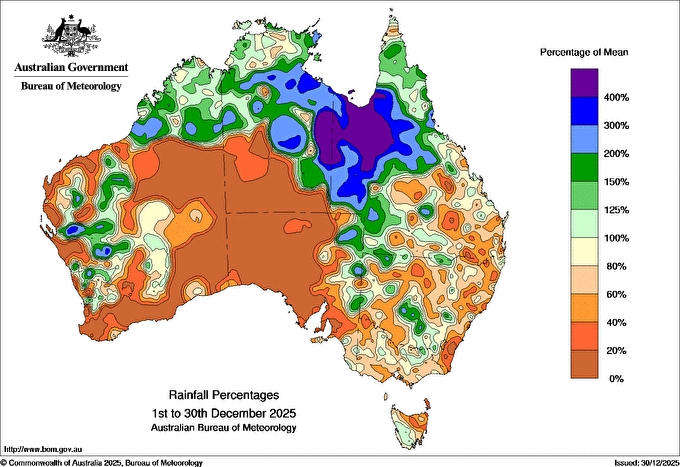
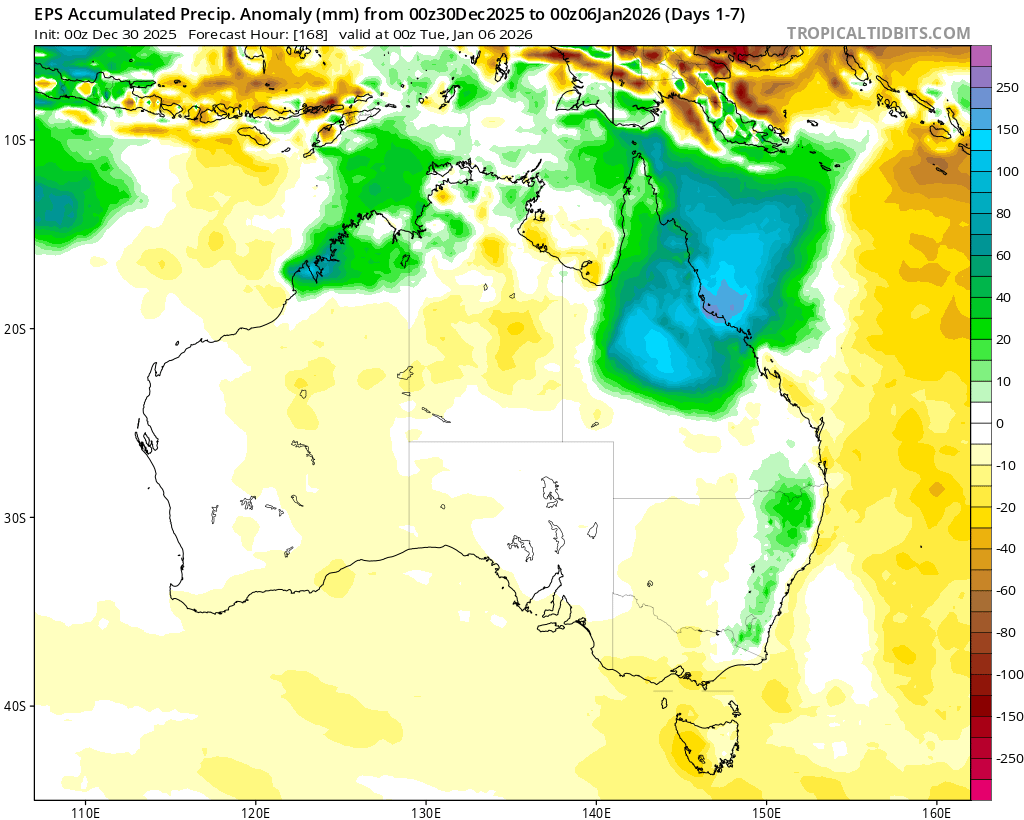
Much of the rain in northwest Queensland has fallen over the last week or so, equivalent to nearly their entire annual rainfall. Rain totals have been on the order of 600 mm (23 inches) in spots. Rainfall looks to continue above normal over the next week, though the most anomalous totals may pass just east of the hardest hit areas in Queensland.
The cause of all this has been a very active monsoon trough and embedded low pressure that has been slow to exit the region. Numerous rivers are in flood stage with the Flinders River the most potent right now, in major flood in northwest Queensland.
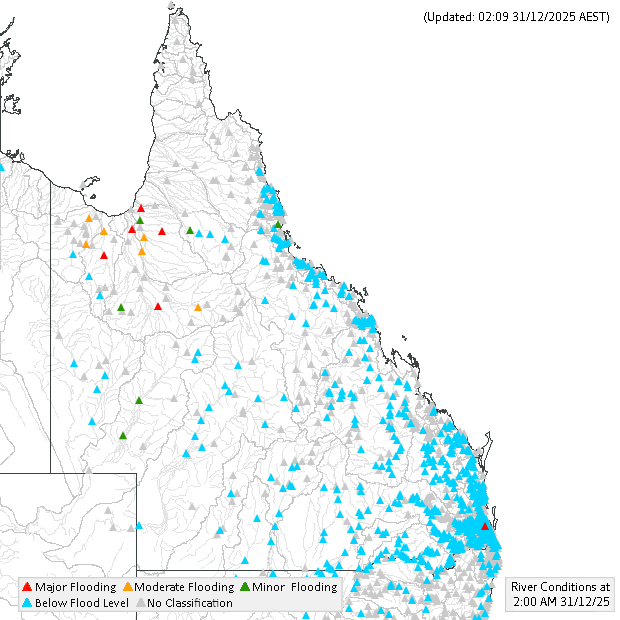
Coverage from Australia indicates that some Outback communities are cut off due to flooding. The heavy rains are also a bit earlier in the season than is typical, and there will likely be agricultural impacts due to the rains. According to Google’s Flood Hub, this flooding is some of the worst since 2019 (though not quite to that level per local news reports).
Mozambique
Heavy rainfall is occurring in parts of Mozambique, which has led to flooding and will likely produce continued flooding in the country. The most significant of the flooding has occurred in the Sofala and Zambézia Provinces, highlighted on the map below. Some parts of coastal Mozambique have seen over 400 percent of normal rainfall in the last 10 days.
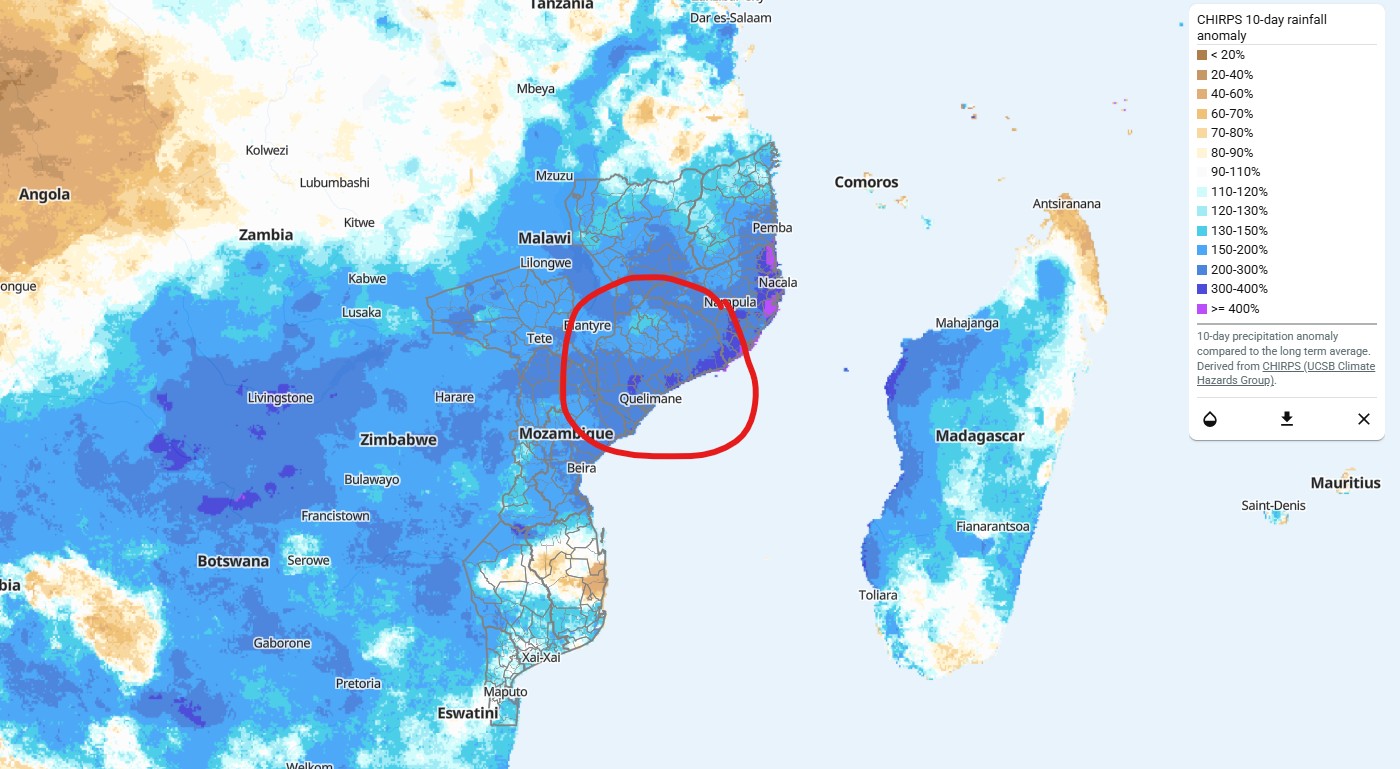
At least 16 people have been killed in Sofala province due to this event, and over 9,000 people are in temporary housing. Flood response will continue across central and northern Mozambique, with continued above normal precipitation expected to occur. In addition, a large number of crops have been destroyed by the flooding.
Canada
While not as severe as in Australia or Africa, the flooding in Canada has been notable, both in the east and west. In the east, flooding in Ontario is ongoing due to recent rains from the wild weekend storm we discussed yesterday. A lot of water just ran off from the generally hard, frozen ground into river systems across the region. While it wasn’t a lot of rain, it was enough to spur some flooding.
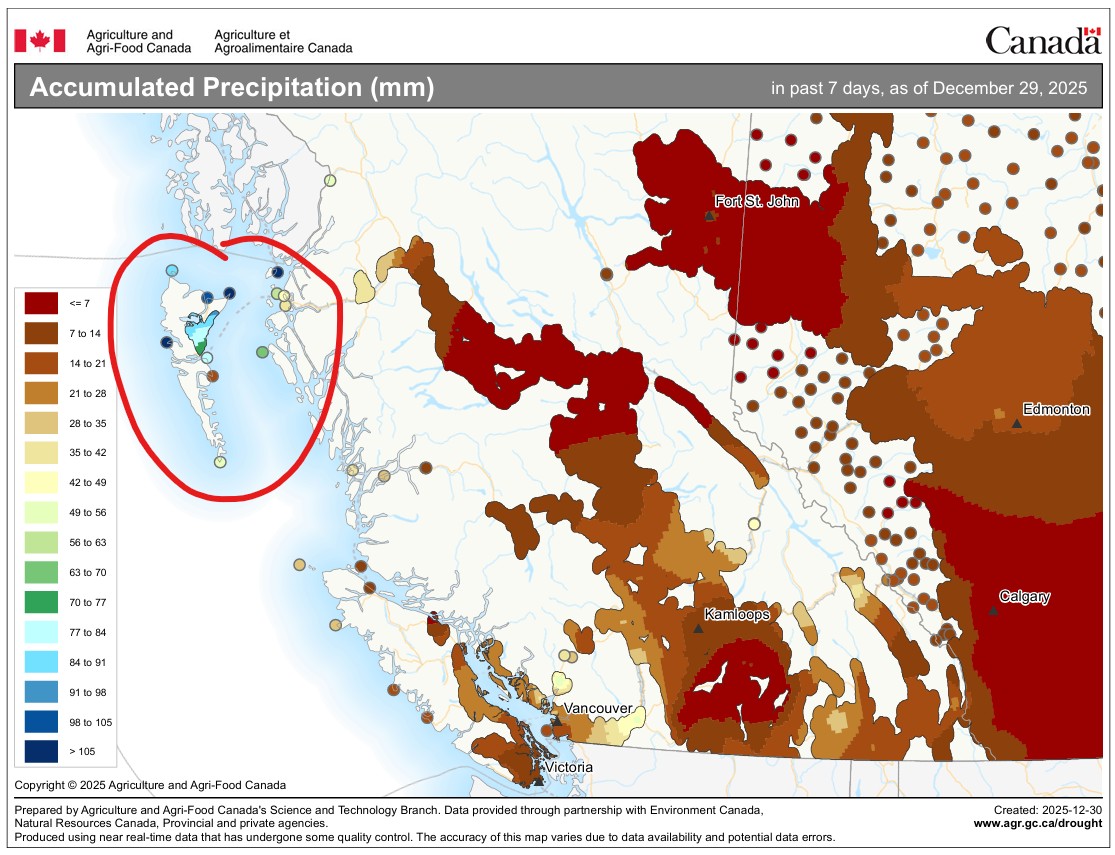
Flooding is a good deal worse on the West Coast, with parts of the North Coast in British Columbia seeing severe flooding. There are road washouts in the Haida Gwaii Archipelago. One of the road washouts was a critical north-south route on the main island. That area is emerging from a multi-day moderate atmospheric river event.
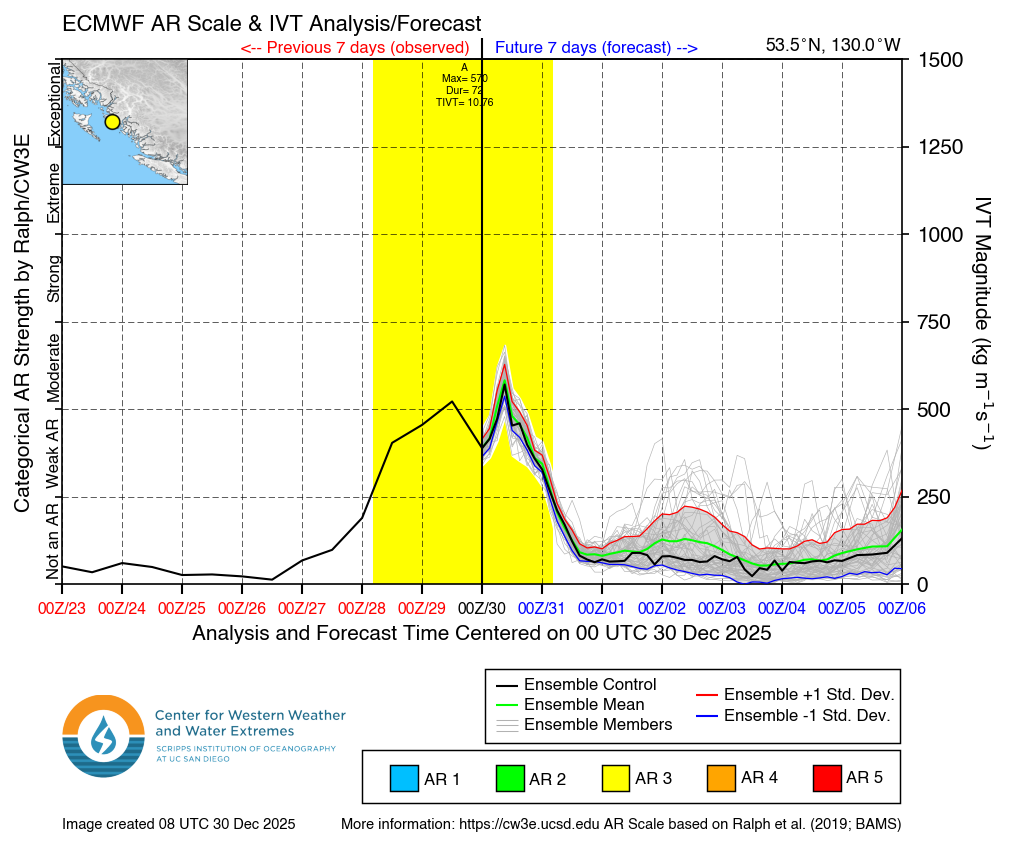
The highest rain totals over the last week across Canada have been in this area, with some places seeing over 100 mm (4 inches) of rainfall.
Coupled with somewhat warmer than normal temperatures, rain was the issue. Fortunately, the worst should slip south of this area after a day or two.
Newsy bits
Mobile, Alabama: Every dollar invested in preparedness and resiliency in Mobile, AL produces $14 in economic cost savings and over $20 when factoring in damage and cleanup savings according to a study done by the U.S. Chamber of Commerce, Allstate, and U.S. Chamber Foundation. This is further study that strongly argues investment in preparedness is smart spending. You can’t prevent losses, but you can limit them. (U.S. Chamber of Commerce)
Alaska: Displays of the Northern Lights (Aurora Borealis) at very far south latitudes over the last year or so have been incredibly photogenic. The data behind them has also been impressive (Alaska Public Media)
Jamaica: Solar panels were a success story in the wake of Hurricane Melissa’s destruction in Jamaica. While there’s not much anyone can do in the immediate core of a storm that strong, for those with installations and homes built to code that survive with minimal roof damage, solar power can offer a respite from the wider-scale outages that impact communities at large during a storm, even away from the core. (New York Times)
St. Louis: Work to remove debris and begin demolition of certain properties affected by the May tornado that tore through the city could begin in January, assuming FEMA money actually shows up. We’re seven months post-tornado outbreak, and this is just now beginning to be addressed, so I think it’s important to recognize that the pace of FEMA funding has slowed dramatically in the current administration. (St. Louis Public Radio) Also, the story of resilience in the communities impacted by the May tornado. (St. Louis Public Radio)