As Milton exits Florida, we reflect and have to ask what’s next

Headlines

  • Hurricane Milton is now a non-tropical storm as it moves out to sea.
  • A very historic tornado outbreak, flash flooding, and storm surge were all elements of Milton that were notable in Florida.
  • In the deep Atlantic, Hurricane Leslie is headed out to sea.
  • There are hints of additional development chances late next week in the western Caribbean, but it is way, way too soon to speculate on whether that happens for real or where it would go if it did.

Milton’s mess

Hurricane Milton is moving farther away from Florida this afternoon. We say good riddance. There will be a number of things to discuss in the wake of Milton, from its incredible intensity ramp up to its precipitous weakening and how that may have played a role in surge, track, winds, flooding, and the daytime tornado outbreak in eastern Florida. We’ll place a bookmark here and come back to it at some point in the offseason I think.

Milton is now transitioning from a tropical system to a non-tropical system as it moves out to sea. (Weathernerds.org)

The elements of Milton that were most noteworthy in my opinion:

Each red dot signifies a tornado report from yesterday. The hardest hit area was from Palm City through Fort Pierce into Vero Beach. (NOAA SPC)
  • The huge footprint of heavy, flooding rainfall. We had a wide area of rain totals that exceeded 10 inches with a 100 to 500 year return period between Tampa and Daytona Beach. The flash flooding is likely to have caused significant damage across the region.
Total rainfall in excess of a foot (dark purple) covered a wide area of the I-4 corridor. Heavy rain also occurred to the north into Jacksonville. (NOAA NSSL MRMS)
  • Then, obviously, the storm surge. How bad was it between Longboat Key, Sarasota, Siesta Key, and Venice? That’s only just now becoming clearer. It’s been tough to find hard station data but I have seen a report of 7 foot water levels near Venice, which would equate to at least 6 to 7 feet of surge. One would assume that water levels were somewhat higher to the north of there near Siesta Key and Sarasota, possibly up to 10 feet or so.

Between Milton and Helene, we’ve had a rough few weeks in the Southeast. We hope for the best for those impacted and for the recovery process to be as painless as possible.

What’s next?

In the deep Atlantic we have Hurricane Leslie that is on its last legs as it motors out to sea.

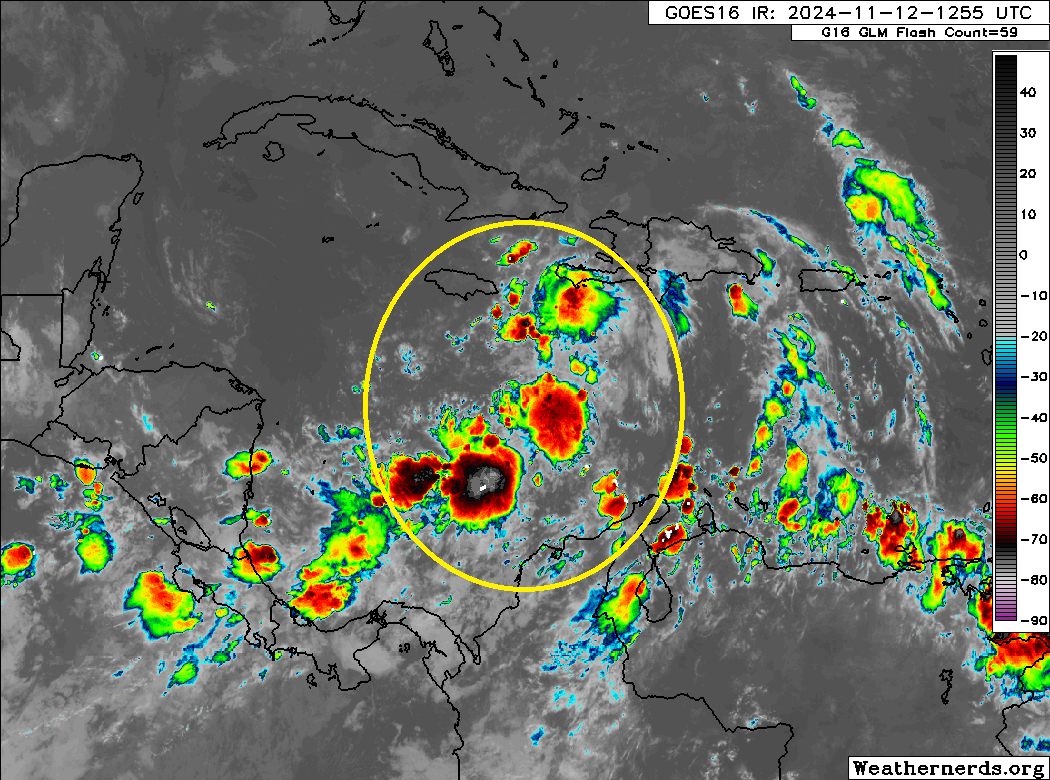
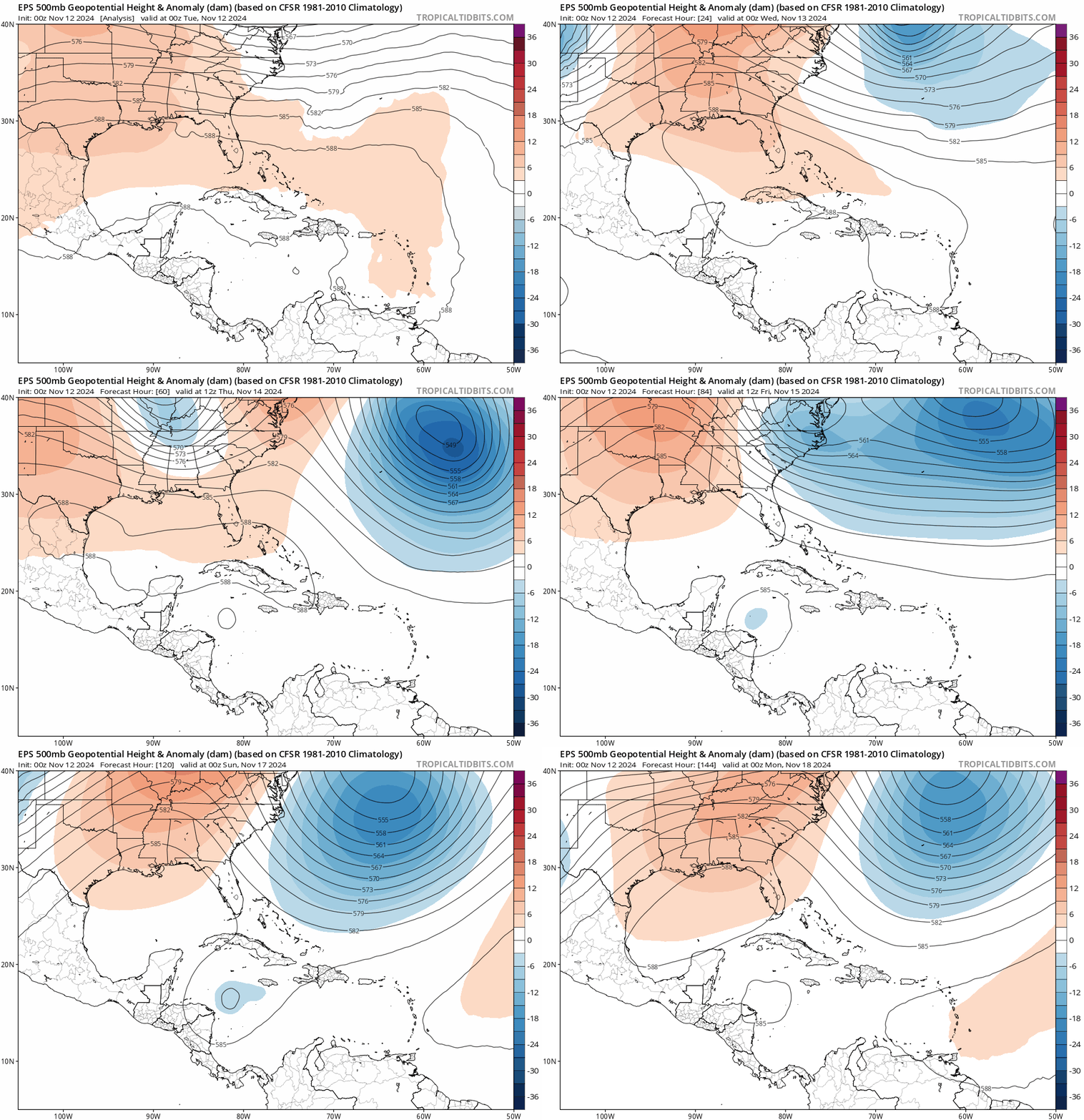
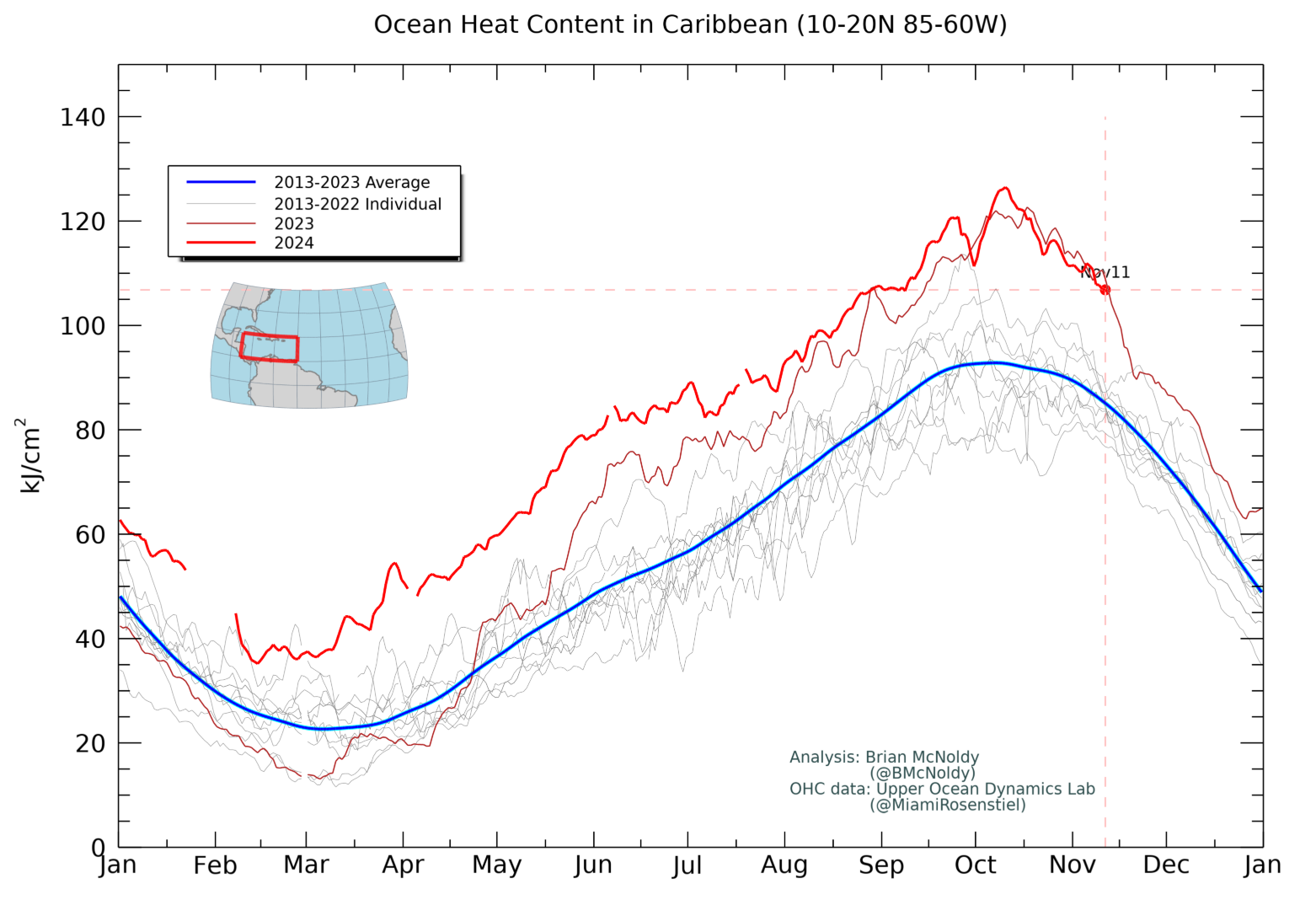
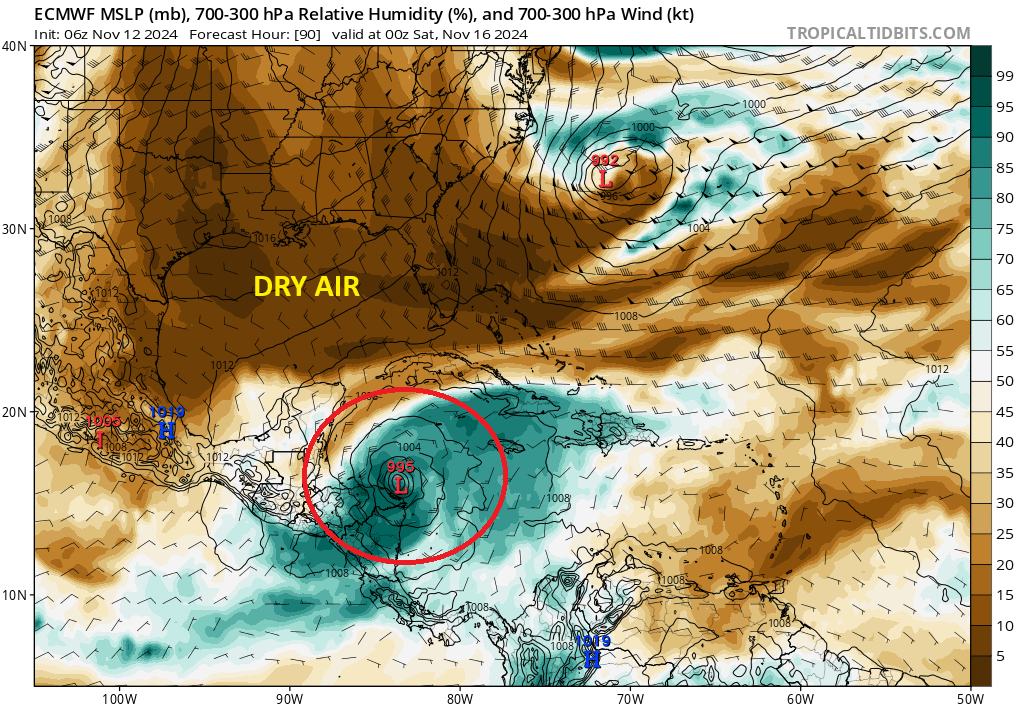
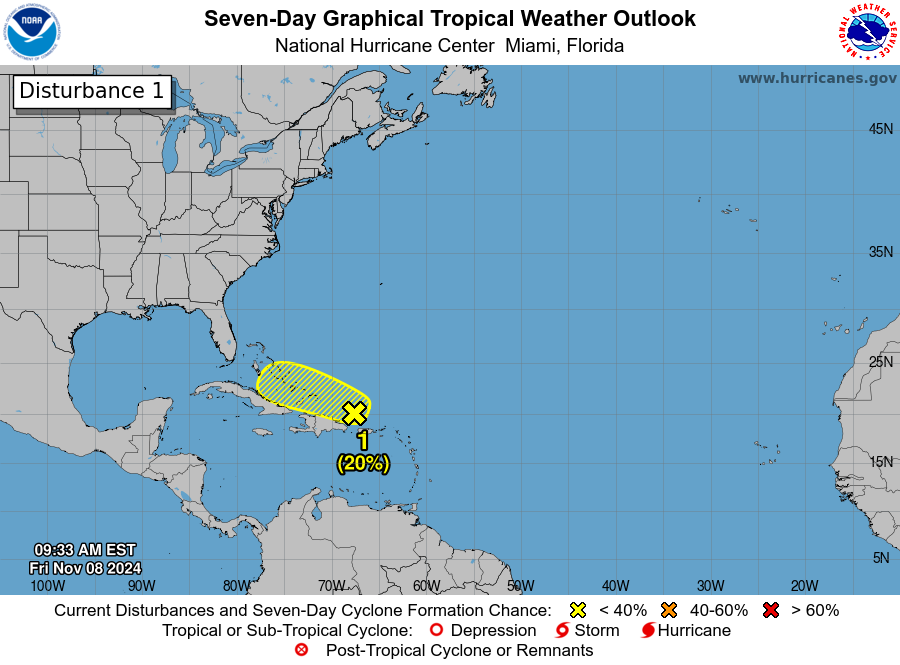
But there are hints on the models at least of a new potential disturbance in the Caribbean. This is still about a week or more out. But it seems that if something were to develop in the next 2 weeks, this is where it would happen.

The potential for new development in the western Caribbean is not zero late next week. But it’s too soon to speculate on what that looks like or where it goes. (Weathernerds.org)

While this will certainly get a lot of folks riled up, it’s important to note that with this being a week or more out, there is no guarantee anything will develop, nor is there any knowledge of where anything will go if it does develop at this point. All we can do right now is speculate that something could possibly develop in the western Caribbean in a week to 10 days. That’s a long time out, so don’t start stressing right now.

Storm surge spares Tampa, but the rain does not, with a major flash flooding event underway

Headlines

  • Milton made landfall near Siesta Key earlier this evening.
  • Storm surge of 8 to 10 feet is likely to have occurred near Sarasota through Venice.
  • Surge of 5 to 6 feet is causing major flooding in Fort Myers, Naples, Punta Gorda, and elsewhere down the coast.
  • Tampa Bay was spared the worst case scenario surge.
  • But major to catastrophic flash flooding is now ongoing in the Tampa metro area, with torrential rain expanding north and east up I-4 toward Orlando.
  • Over 1.5 million customers experiencing power outages now in Florida.

Hurricane Milton made landfall near Siesta Key this evening as a category 3 hurricane. An approximately 10 foot storm surge came ashore in Sarasota, while Tampa Bay ranged from negative surge (water being flushed out of the bay) in the upper part of the bay to about 2 feet in the lower part. Had Milton made landfall even 15 to 20 miles farther north, we’re talking about a 10 to 12 foot surge into Tampa Bay. That’s how close it came for Tampa…20 miles. Farther down the coast, about a 5 to 6 foot surge is ongoing in Fort Myers. There are videos from Venice floating around showing pretty terrible surge as well. So I presume daylight will bring a pretty rough scene in Sarasota, Venice, and Longboat Key, among other places.

A 5 foot surge in Fort Myers this evening is leading to major flooding. (NOAA NWS)

Relentless rain is pounding the Tampa metro area and now spreading north and east across the Florida Peninsula. Totals for today have been up to 17 inches in St. Petersburg and over 10 inches around much of Tampa.

Tampa area rain totals so far today. (NOAA NWS)

There’s still a good deal more rain to come though hopefully the pace will slow somewhat. A flash flood emergency is in effect in Tampa. Catastrophic flooding is possible from the rainfall. This may not be the last flash flood emergency we see this evening, with torrential rain working northeast on I-4 toward Orlando and Deltona.

Torrential rain, serious flash flooding and strong winds are headed to Orlando soon. (RadarScope)

Several inches of rain will fall in a short time here, and severe flash flooding may occur. Thankfully, the tornado threat has pushed offshore for now, and though an isolated tornado can’t be ruled out there should not be the ridiculous pace we saw earlier today. The damage in eastern Florida from tornadoes is going to be more significant than we typically see in a tropical system. Why this storm went ballistic whereas other do not is a complex topic to get into but perhaps one we can touch on during the offseason.

Next update will be in the morning sometime. Wishing all the best in Florida.

Florida dealing with tornadoes and now storm surge as Milton is on final approach to the west coast

Headlines

  • Milton’s eyewall with powerful winds and a dramatic rise in water from storm surge is about to begin coming ashore between Saint Petersburg and North Venice.
  • Tampa Bay may empty out as it approaches (as seen in Irma and Ian), and you should not be anywhere near the bay, as water may come rushing back in quickly and without warning.
  • The worst surge will come dangerously close to moving into portions of Tampa Bay south through Venice.
  • Significant surge will continue building south of there to Fort Myers and on the east coast as well.
  • A historic tornado outbreak has been ongoing across the eastern half of the Florida Peninsula and will continue a bit longer.
  • Flooding from another 10 inches of rain is likely in the northern half of the Peninsula.
  • Milton exits tomorrow to the east and out to sea.
Milton’s forecast takes it far away eventually. (NOAA NHC)

Hurricane Milton is gradually approaching the coast of Florida. It remains an unnervingly close call for Tampa Bay as every wobble makes a difference right now. But it appears the landfall window is between North Venice and Fort De Soto at the entrance to Tampa Bay. The worst of the surge and wind will probably impact the area between Tampa Bay and Venice, with significant surge to the south of there as well. The surge forecast has been adjusted somewhat today.

Storm surge is going to rapidly pick up over the next 2 to 4 hours. (NOAA NHC)

We still expect significant to borderline catastrophic flooding and inundation in some communities unfortunately. Surge values are currently about 1 to 4 feet on the west coast of Florida. Again, near and south of where this makes landfall will see a dramatic increase in water levels soon as that center approaches.

I can not say this loud enough: If water exits Tampa Bay as we saw with Ian and Irma, do not, I repeat, *do not* go into or near the bay to gawk. This one is coming in much closer to Tampa and it’s possible a wall of water comes rushing back in at some point. You will be trapped.

Milton is not as intense in terms of wind (now a cat 3 with 120 mph winds), but it has essentially doubled in size since this morning with tropical storm force winds extending out as much as 250 miles from the center. Hurricane force winds remain confined mostly to that eyewall that is preparing to come onshore near Sarasota and Bradenton. Conditions will get very, very nasty over the next 2 to 4 hours.

Hurricane Milton’s vicious northern eyewall is preparing to come ashore now near and north of Sarasota with powerful wind and a dramatic increase in storm surge. (RadarScope)

This is the time where you shelter in place and hope for the best. We certainly hope for the best for folks in Florida too.

Milton has been a prolific tornado producer in Florida today.

A map of all tornado warnings issued through 4:40 PM ET in Florida today. (Iowa State Mesonet)

It will take time to weed through the warnings, reports, and damage, but I am certain we will have one of Florida’s most significant tornado outbreaks when all is said and done. Additional tornadoes are possible as the center moves across the state.

Flooding rains continue also, with as much as 2 to 5 inches so far across Florida and a lot more to come.

Rain totals so far today from Milton. (NOAA NWS)

Those rains continue tonight, and we’ll see flooding expand and worsen across the northern half of the Florida Peninsula. As much as another 10 inches or so is possible.

Milton will exit and turn into an extratropical storm (basically akin to a nor’easter or generic “coastal” storm) tomorrow as it rushes out to sea. We can then begin to assess the damage. All the best to our Florida friends, and we’ll have another brief update either mid-evening or in the morning.

Milton begins to bear down on Florida while growing further in size

Headlines

  • Milton remains a powerful category 4 hurricane, expanding in size.
  • The track should take it somewhere between Tampa Bay and Cape Coral late this evening.
  • Widespread impacts are expected on the west (and east) coasts of Florida, as well as inland with power outages, flooding from rainfall, wind damage, and storm surge.
  • The worst of the surge will impact near and just south of where Milton’s center crosses the Florida coast. A 10 to 15 foot surge is likely in that nearby area, with significant surge beyond that as well, down to Fort Myers Beach or even farther south.
  • 12 to 16 inches of rain will cause significant flash flooding between Tampa and Daytona.
  • Isolated tornadoes are possible.

Hurricane Milton is beginning to impact Florida directly now. Outer rain bands are moving ashore, and the bands offshore definitely look pretty nasty with possible waterspouts. We’re also beginning to see how Milton’s asymmetry will lead to substantially higher rain totals along and north of the path of the center.

Hurricane Milton is beginning to accelerate toward Florida while becoming a larger storm in size. (Tropical Tidbits)

The winds are currently down to 155 mph, making Milton a top end category 4 storm. Hurricane-force winds extend out 30 miles from the center and tropical storm force winds extend out 125 miles, still reasonably close in size to yesterday’s reports. Further expansion of the wind field is expected today. Basically, as Milton’s top end winds drop, it’s moderate to strong winds will expand to cover a larger area. It’s a poisonous trade off, and while it’s accurate to say that Milton will “weaken” today, it’s also accurate to say it is becoming somewhat more dangerous.

Hurricane Milton is currently following the NHC path closely, which will bring it uncomfortably close to Tampa Bay and probably ashore between Tampa Bay and Cape Coral tonight. (NOAA NHC)

The track is pretty straightforward. Milton will continue northeast over the next 12 hours before beginning to turn more to the east-northeast as it crosses Florida. Milton is going to undergo what we call extratropical transition. Basically, since we’re in autumn, with a big cold front sweeping in, Milton will be absorbed into the jet stream.

Here’s how Milton will look 20,000 feet up as it gets intertwined with a cold front and ushered out to sea. (Tropical Tidbits)

On the one hand, this isn’t great because it will lead to an expansion in the wind field as it crosses Florida, and it will also lengthen the wind, as the backside of the storm will continue to have strong wind moving across Florida. On the other hand, this will help the post-storm recovery weather be somewhat cooler and less humid. That cannot go without saying.

Bottom line: A major hurricane with a growing wind field and long duration of wind will be likely tonight and tomorrow morning across Florida, particularly near and north of the track.

Will Milton avoid the Tampa Bay disaster? It’s possible. Most modeling currently takes it south of Tampa Bay, uncomfortably close and within the “margin of error” but still skewed to the south. Here’s the GFS operational forecast model trend of the last several runs, with the “X” indicating Milton’s actual center point.

The GFS model has been aggressive with a hit on Tampa Bay, but it’s verifying slightly farther south than the model expected. This opens the door to a landfall between Sarasota and Cape Coral, but it does not rule out Tampa; a couple wobbles north and it’s back on track toward there. (Brian Tang/SUNY Albany)

You can see how Milton has begun to drift off course relative to most recent GFS runs, or at least on the south side of guidance. I chose the GFS because it has been rather consistent in showing a hit very near Tampa Bay. These trends indicate that there is some potential the landfall point may be coming south. Would I sound an all-clear for Tampa? Not at all; this is still within the margin of error as I said. But if you want good news in Tampa specifically, this may be it. Unfortunately someone has to get the surge. And the area between Sarasota and Cape Coral may be at highest risk now for a 10 to 15 foot surge. The peak surge forecast has nudged southward a bit today.

A peak surge of 10 to 15 feet is currently expected between Anna Maria Island and Boca Grande, but there is some risk that could nudge even a little farther south today. (NOAA NHC)

A very bad storm surge will come in on the Suncoast and south to the Lee Island Coast. Where the worst comes in will be dictated by exactly where the center goes, something we’ll monitor today.

A high risk (level 4/4) of excessive rain and flooding is posted for most of central Florida, including the entire I-4 corridor, Daytona, Tampa, and Sarasota. (NOAA WPC)

Heavy rains of 12 to 16 inches continue to look likely across the I-4 corridor which will produce significant, possibly damaging flash flooding. A high risk (level 4/4) is posted for this region for that flooding. Additionally, isolated tornadoes will be possible.

Bottom line: Milton remains a serious threat to cause significant damage and disruption on the west-central coast of Florida with flooding rains and power outages inland. We will update again around or just before the 5 PM ET advisory.