October 9, 2023 Outlook: Lidia and Max move to Mexico with rain chances spreading toward the U.S.

One-sentence summary

The main land impacts this week from the tropics will come via two eastern Pacific systems that will hit Mexico, eventually spreading precip across the Gulf Coast region of the U.S.

Tropical weather: Pacific moisture and a late season Cabo Verde system

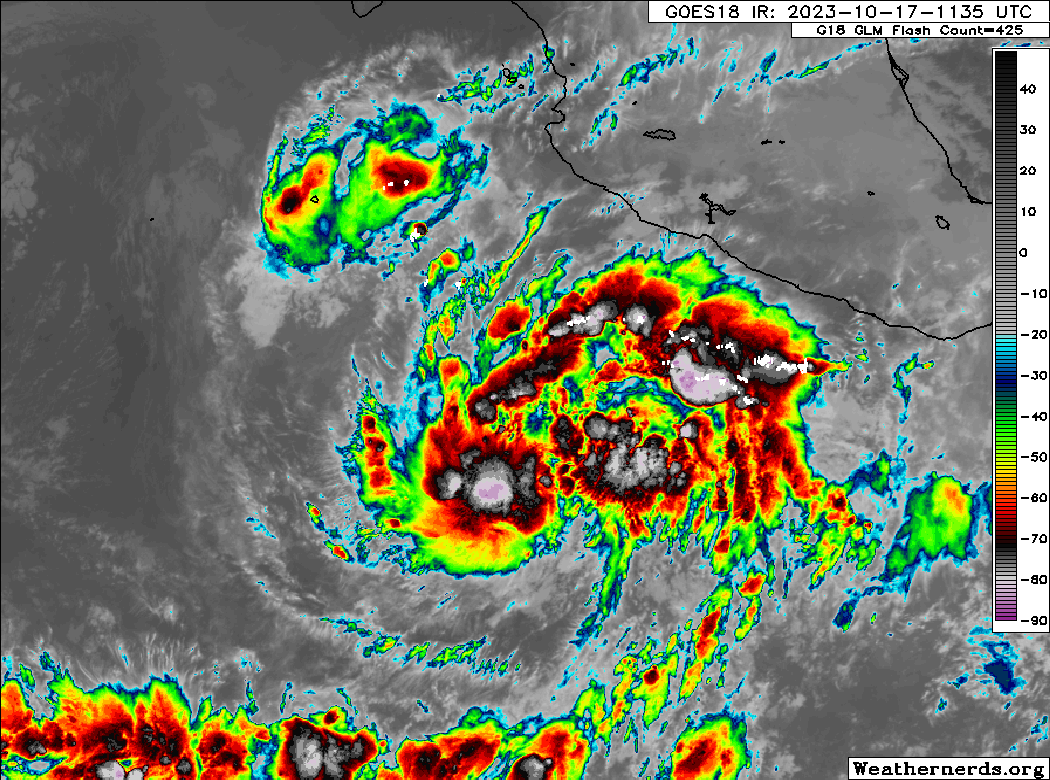
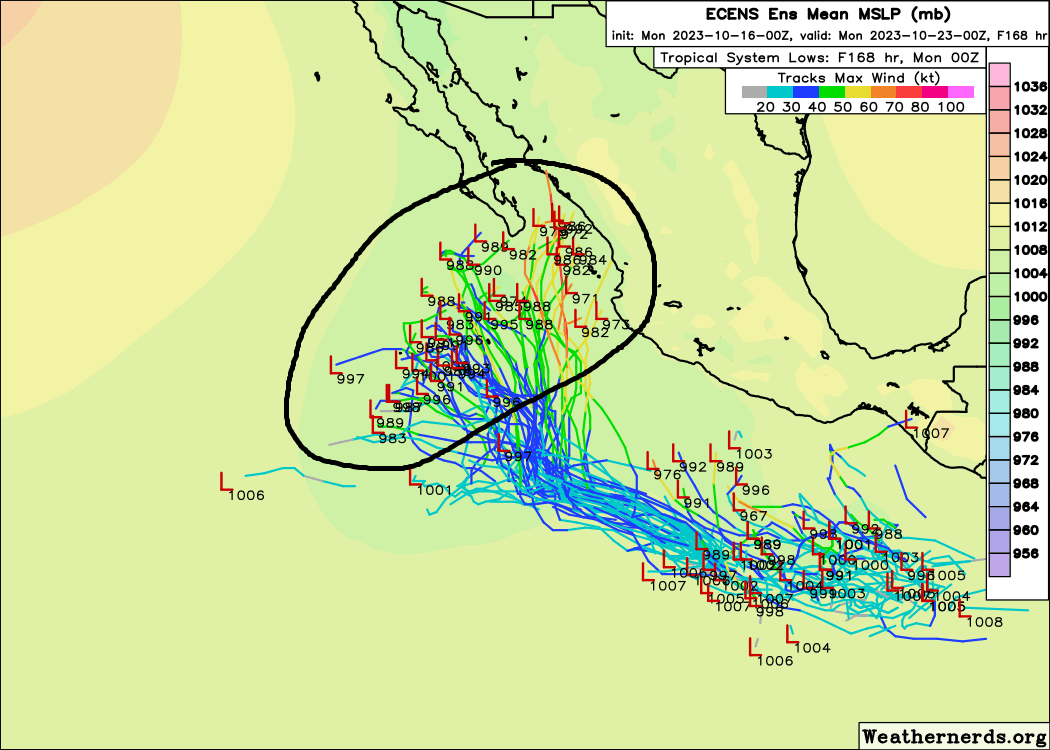
In terms of land impacts, the main story will be Tropical Storm Lidia in the Pacific. Lidia will likely become a hurricane before making landfall between Puerto Vallarta and Mazatlán. To the south, Tropical Storm Max will come ashore later today in Guerrero just west of Acapulco.

Tropical Storm Lidia is expected to become a hurricane as it makes landfall in Mexico this week, likely between Puerto Vallarta and Mazatlán, while Tropical Storm Max will come ashore in the state of Guerrero just west of Acapulco. (Tomer Burg)

Lidia will be capable of producing flash flooding and mudslides in portions of Jalisco, Sinaloa, and Nayarit in Mexico, as well as a substantial storm surge in the Islas Marias and on the Mexico coast near and south of where it makes landfall.

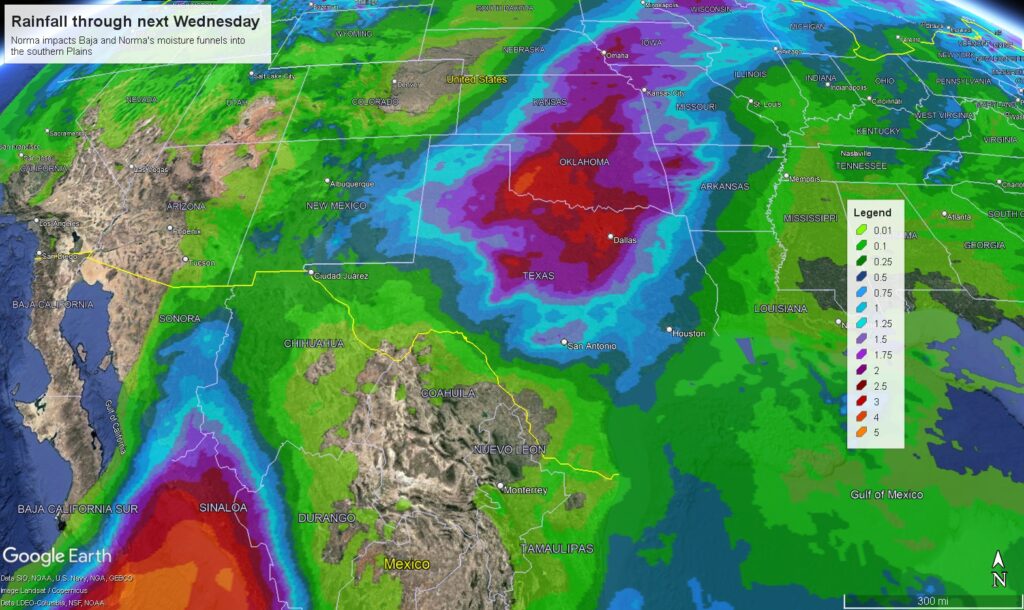
As Lidia and Max track across Mexico, moisture will arrive in South Texas and eventually spread east across the Gulf toward Louisiana, Mississippi, Alabama, and Florida. In addition, a developing low pressure system in the Bay of Campeche may act to focus some of this rain with a low-end chance of tropical development before it rockets east. Heavy rain is possible in that corridor, with as much as 2 to 4 inches from Corpus Christi to New Orleans to south Georgia and much of Florida.

Total rainfall is expected to be highest from South Texas (just off the map here) to south Louisiana, Florida, and South Georgia. (Pivotal Weather)

Localized flash flooding will be possible from this, but in general, this will be mostly welcome rainfall. We’ll watch the track of all this over the next day or two to see how this evolves (whether it’s further south, more consolidated, etc.) but a decent soaking is expected in these areas.

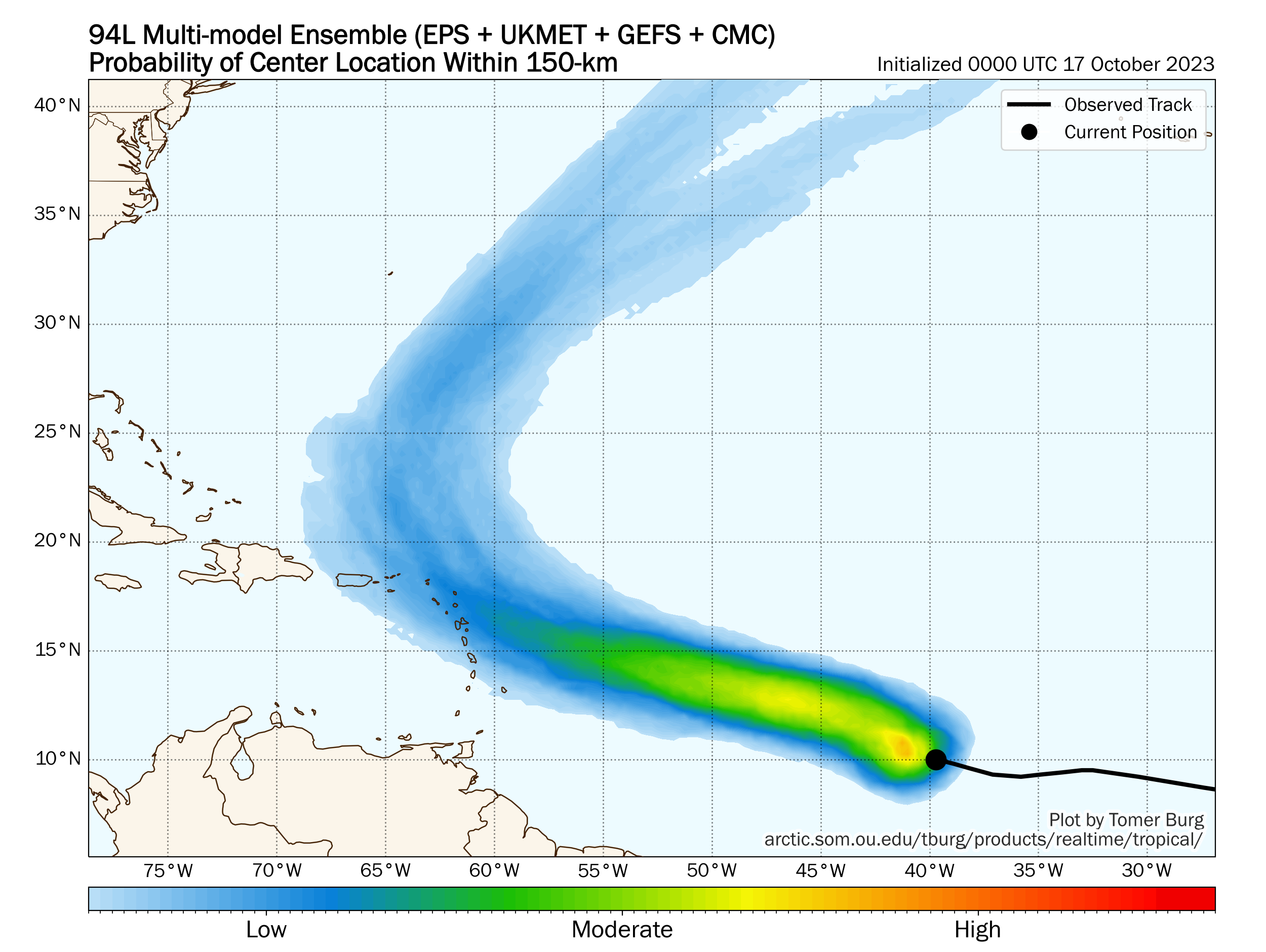
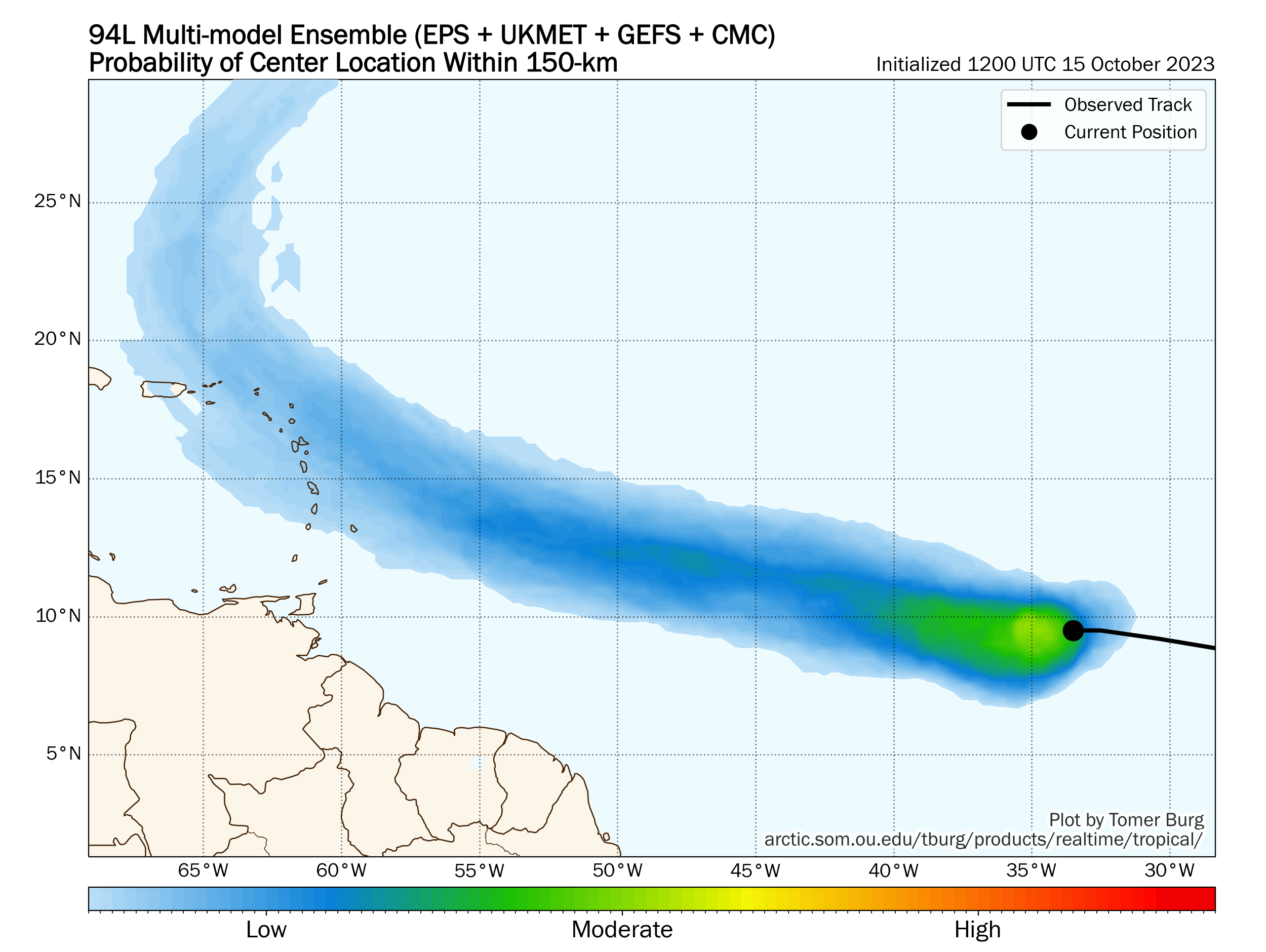
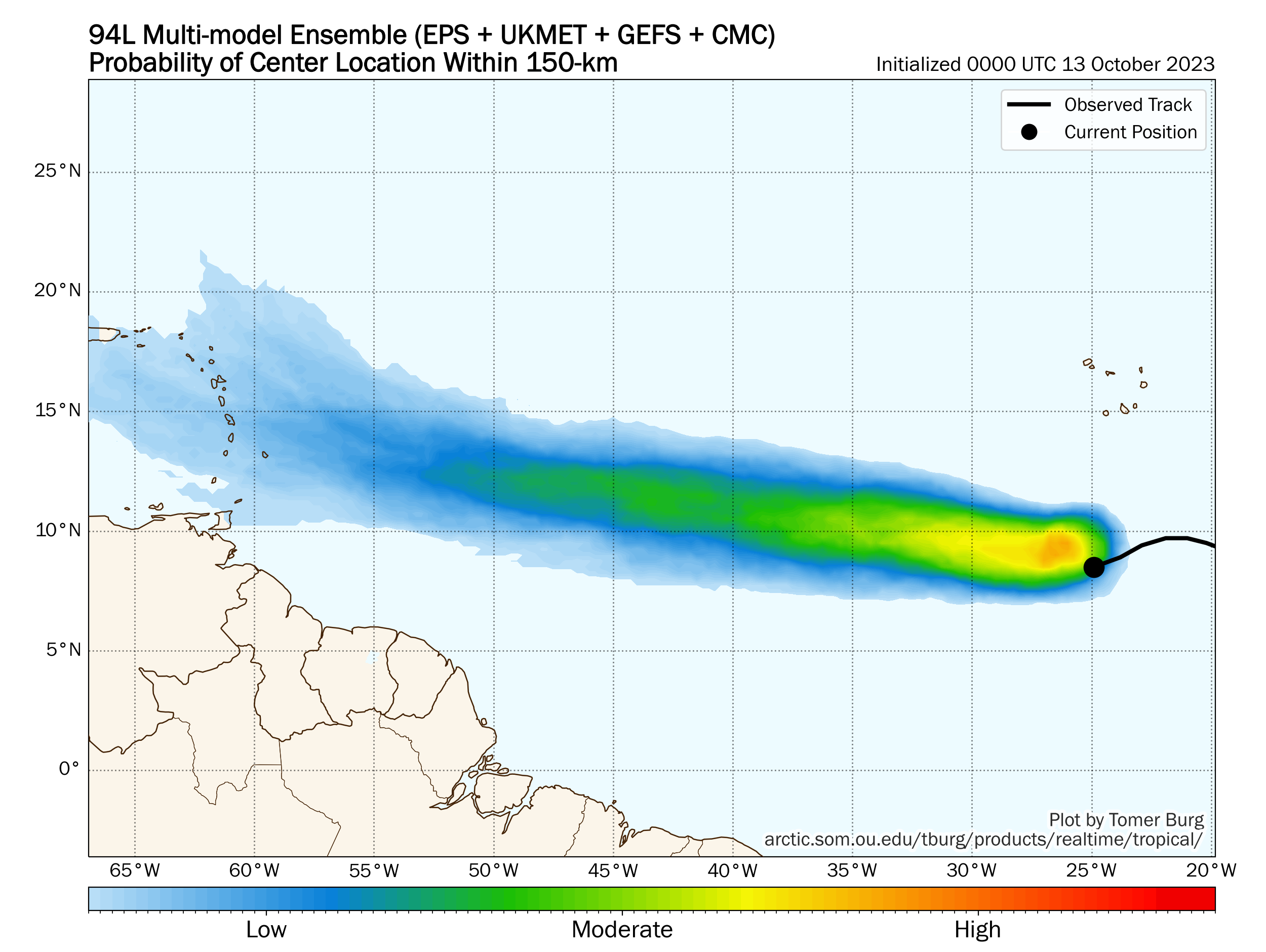
Elsewhere in the Atlantic, things look quiet for now, but Invest 92L in the deep Atlantic near the Cabo Verde Islands is likely to develop this week. This is not an area where you’d historically be looking for tropical systems in mid-October. Every so often one can form, and that may be the case here. The good news is that it’s expected to turn out to sea rather quickly and be of no impact to land.

Invest 92L is expected to track west before turning northwest over the open Atlantic as it becomes a tropical storm.

Elsewhere, the Atlantic looks fairly quiet for now, with the Caribbean and Gulf under control for the next 7 to 10 days or so.

Annular eclipse outlook

The first of two major solar eclipses over the next 6 months occurs this weekend, as an annular eclipse tracks across much of the southwestern United States. In April, there will be a total solar eclipse that tracks over most of the eastern half of the country into Canada.

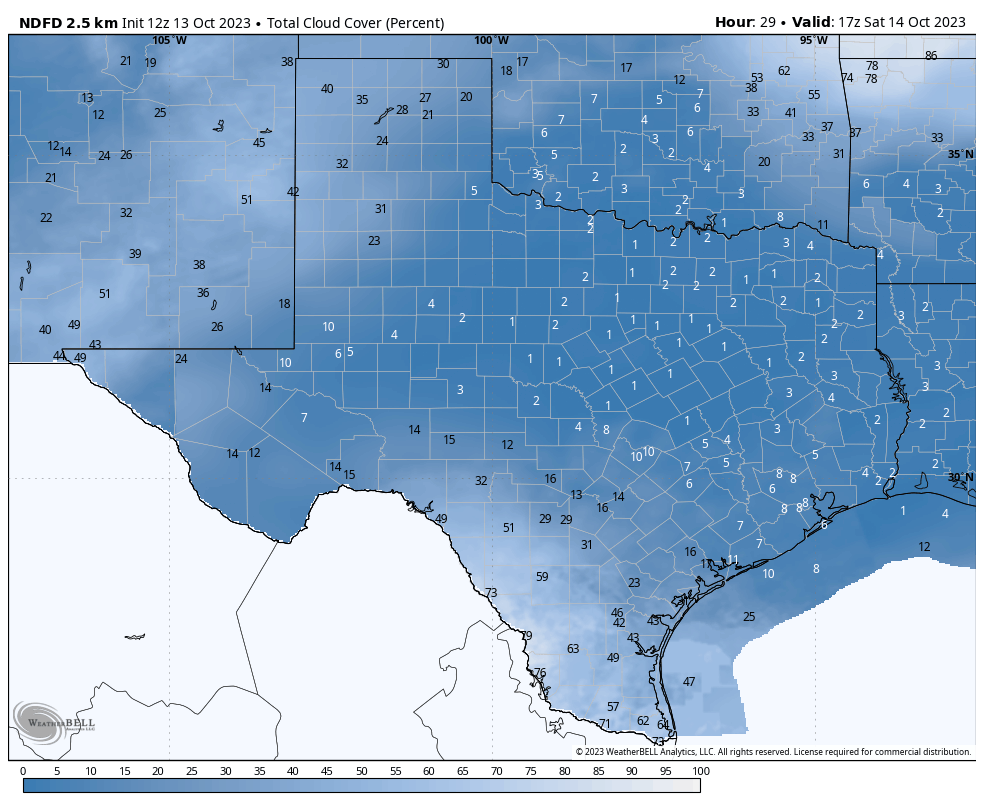
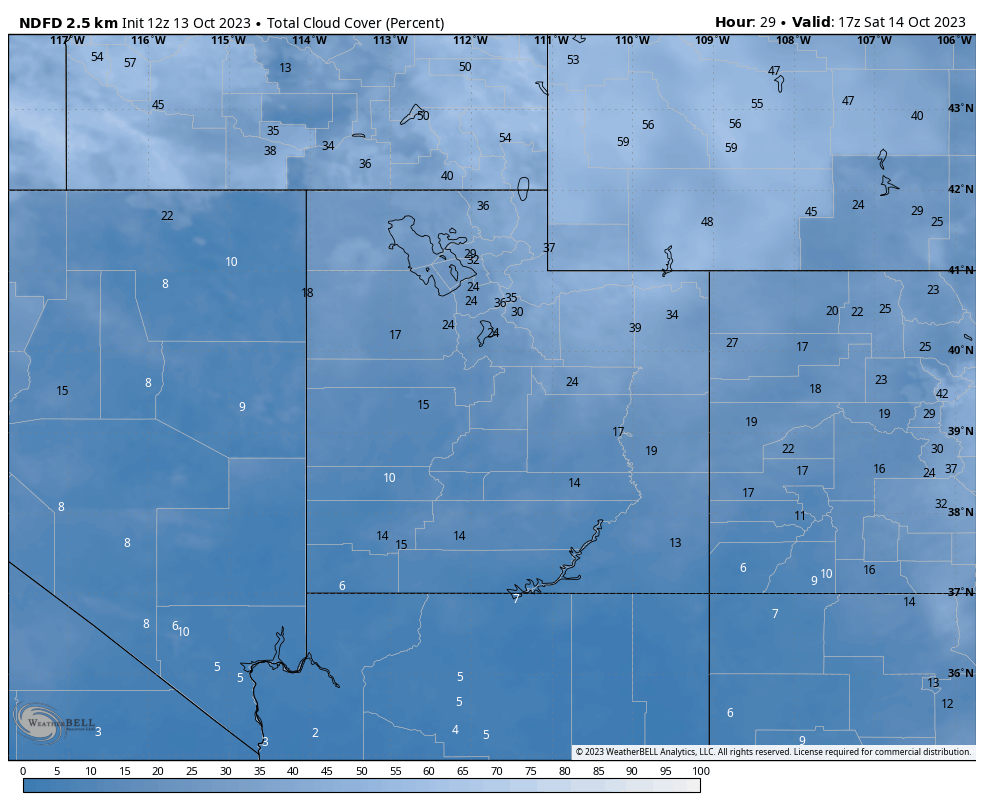
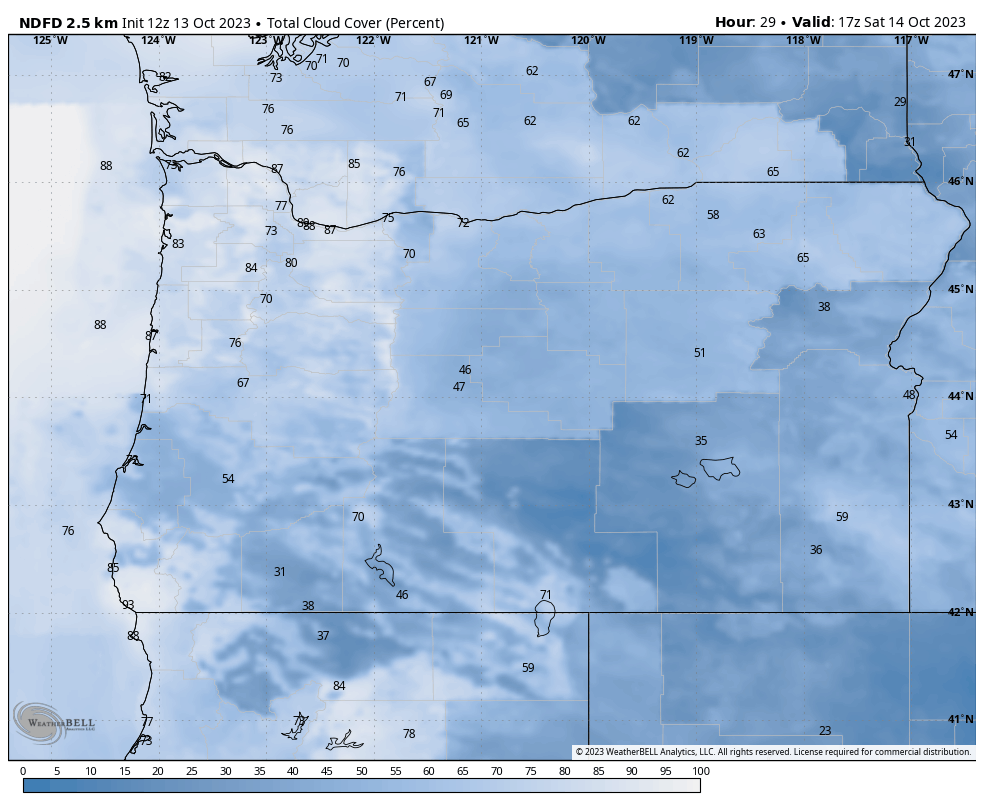
Click to enlarge an image of the path of Saturday’s eclipse at left and a cloud cover forecast from the European model at right. It appears the best areas to view the eclipse will be in Texas and Utah. (NASA/Pivotal Weather)

An annular eclipse occurs when the Moon passes in front of the Sun, but does not block it entirety, leaving a ‘ring of fire’ in the sky. It is crucial to use solar eclipse glasses when viewing the Sun during the eclipse!

In terms of the best spots to view the eclipse, our money is currently on Texas and Utah. We’ll fine tune things as we get closer. But it appears that a storm system will spread clouds over much of Oregon, which is where the eclipse will first be seen. Conditions may improve once you get into Nevada, and they look solid right now in Utah and the Four Corners (I assume nearby Monument Valley will be a popular spot for this). New Mexico is a bit of a crapshoot right now, as some models indicate high clouds. Once in Texas, things should be clear, although high clouds may spoil things in the Rio Grande Valley or Corpus Christi areas. We’ll provide an update on this for you again later in the week!

October 6, 2023 Outlook: Philippe to bring wind and rain to Maine and Canada and even some snow to Quebec and Ontario

One-sentence summary

Philippe will bring a variety of weather to Maine, Quebec, and Ontario this weekend as it transitions to a non-tropical storm and offers up heavy rain, gusty winds, and even some snow in parts of Canada.

Philippe destined to follow Lee’s footprints

Tropical Storm Philippe is a little stronger today as the center approaches Bermuda. Wind gusts over 50 mph were reported on the island this morning. The forecast remains mostly on track, with Philippe essentially being a smaller, less intense version of last month’s Hurricane Lee.

Philippe is in the initial stages of extratropical transition, where it goes from a tropical entity (a storm that derives energy from warm water) to something akin to a nor’easter (a storm driven by jet stream processes and one that will acquire fronts). Storms are displaced east of Philippe’s center today. (Weathernerds.org)

Philippe will likely become post-tropical by tomorrow and transition to a strong nor’easter-type storm as it moves toward the Gulf of Maine or Bay of Fundy this weekend. It is expected to hook back to the north and west across Quebec and eventually stall out on the south end of James Bay, bringing rain and even some snow to Quebec or portions of interior Ontario.

As Philippe transitions to an extratropical storm it will hook back to the north and west across Quebec and settle near the border with Ontario. (Tomer Burg)

The National Hurricane Center will not be issuing tropical products for Philippe as it moves into Canada and New England, indicating that while it will bring impacts they should be managed at the local level. I think a very plain language translation of this means that, while a notable storm, it is not expected to be an especially damaging one. Marine impacts should primarily be gusty winds and large swells. We’re in a lower phase of the tide cycle right now so that helps mitigate that risk a bit.

Rain totals will peak in interior Maine, portions of the Adirondacks in New York, and interior Quebec, where as much as 5 inches of rain is possible. Click to enlarge. (NOAA WPC)

But the main concern with this will likely be tomorrow night and Sunday with locally heavy rain. Total rainfall may exceed 3 or 4 inches in spots, especially in interior Maine and Quebec (north & west of Quebec City, Montreal, and the National Capital Region). Grounds are still fairly damp, so flash flooding is a distinct possibility in spots. Snowfall would be most likely along the Ontario/Quebec border and north of a Sudbury-North Bay line in Ontario.

Watching the Gulf next week

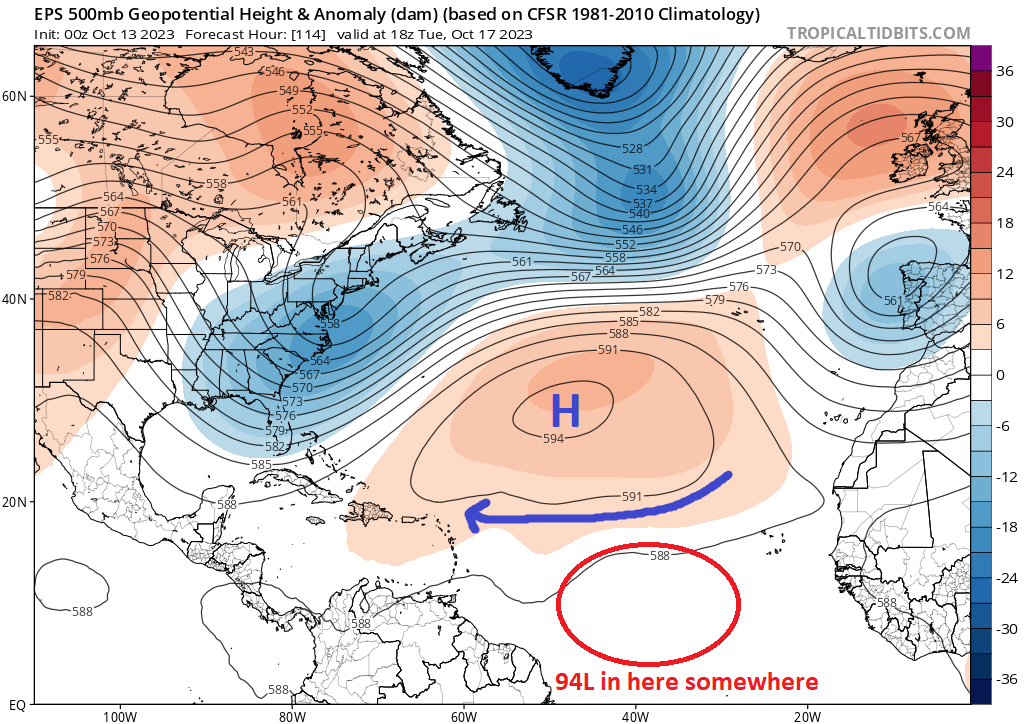
We are starting to see some vague model agreement on next week’s setup with Pacific moisture and tropical noise tracking across Mexico and potentially into the Gulf of Mexico.

The upper level map suggests that whatever happens in the Pacific may get pulled across Mexico next week and into the Gulf, maybe as a lower-end storm, maybe as just a bunch of added moisture. (Tropical Tidbits)

The pattern in the Pacific is such that we should see a bit of a weird entanglement between Tropical Storm Lidia, Invest 99E (the disturbance off the Mexican coast), and an upper level trough in the atmosphere over the Southern Plains and Southeast. How so? In some way, either Lidia or 99E or both will get “pulled” northeast toward Mexico by the upper trough, which will then allow that cluster to track into the Gulf of Mexico. From there, it should probably track northeast or east-northeast across the Gulf toward Florida or the eastern Gulf Coast. What will it be? I don’t know. Probably not a large storm; probably something lower-end. But it could end up being a rain and/or severe weather producer in the Gulf waters or near the coast (or ultimately in Florida). The timing of all this would be late next week. We have a few days to watch this, and we’ll have an update this weekend and on Monday.

Elsewhere, the NHC continues to outline an area deep in the Atlantic that could develop, but it is unlikely to impact land if it does so.

Winter is coming

In addition to the potential snow from Philippe’s remnants in Canada this weekend, we have freeze warnings now populating across the Plains. Freeze watches and warnings extend from northeast Colorado and central Kansas into the Dakotas and portions of western Minnesota.

NWS watches and warnings as of Friday morning shows freeze warnings for more of the Dakotas, Nebraska, and portions of Kansas, Colorado, Wyoming, and Minnesota. Red flag warnings indicating fire risk due to drier air will be posted in the Deep South. (Pivotal Weather)

Low temperatures this morning are in the 20s in spots in Montana but will expand over a wider area on Saturday morning. A warming trend will follow for a time early next week.

Lower Mississippi River dryness

We continue to see the situation in the Lower Mississippi River basin look worse. For Louisiana salt water intrusion to halt or reverse, we need rain upstream; something that can basically flush the salt out. The forecast upriver from New Orleans does not look great, with Memphis likely to see a declining water level over the next 7 to 10 days and most of the Ohio Valley seeing less than half an inch of rain over the next week.

Water levels at Memphis remain near their all-time record lows set earlier this year. (NOAA)

The water level at Memphis this year preliminarily set a new record of -11 feet, and the level by the end of the forecast above has them down to about -10.6 feet again. Hopefully some more meaningful rain can fall around mid-October in the middle Mississippi and Ohio River Valleys, but much more is needed to alleviate the expanding problems in Louisiana. Thankfully at least, the projections for how far north the saltwater wedge gets have slowed considerably.

October 5, 2023 Outlook: Philippe to zip through Bermuda before bringing a nor’easter type impact to Maine, Quebec, and Atlantic Canada

One-sentence summary

Philippe will bring tropical storm conditions to Bermuda tonight and tomorrow before transitioning to a nor’easter-type system and moving into Nova Scotia, New Brunswick, or Maine later this weekend.

Tropical Storm Philippe: Another one for Bermuda & Atlantic Canada/Maine

Tropical seasons tend to have “flavors” to them. And this year’s flavor seems to be that the corridor between Bermuda and Nova Scotia is the highway for quite a few systems. Philippe should join that list.

Philippe will likely bring tropical storm impacts to Bermuda tonight and tomorrow before moving into Maine or Atlantic Canada this weekend. (NOAA NHC)

Over the next few days, Philippe will track northward, probably passing just west of Bermuda tomorrow, which will lead to yet another round of tropical storm conditions on the island. Philippe is not necessarily a strong tropical storm, with winds of 40 mph this morning. But it is expected to gradually become a bit of a broad, more wind-laden system as it tracks past Bermuda and toward Nova Scotia, New Brunswick, or Maine. Ironically, this will be as a result of the storm transitioning (much like Lee did) to an extratropical entity (more like a nor’easter than a tropical storm).

Rainfall over the next 7 days should add up to 1 to 4 inches on average, with a few pockets of higher amounts in Northern New York, Maine, or Quebec. (NOAA WPC)

The main issue from Philippe as it comes north will be gusty winds, rough waves and erosion, and heavy rain as it transitions into a robust non-tropical low over Maine and Quebec. Rain totals are currently expected to be on the order of 1 to 4 inches for portions of New England and Quebec, highest north of Ottawa and Montreal. Localized flooding will definitely be a possibility, and the Weather Prediction Center has northern New England highlighted in their excessive rainfall outlooks for Saturday through Monday.

The specifics on waves and winds will get sorted out in a day or two. But I would expect conditions generally less severe than Lee for Nova Scotia, New Brunswick, and Maine.

What else is out there?

The NHC is highlighting another area in the deep Atlantic that may be able to try to develop next week. Probably nothing, and certainly nothing to worry about at this point.

Closer to land, as Eric noted yesterday, we continue to see some noise in modeling with respect to some moisture off the coast of Mexico. Tropical Storm Lidia will go out to sea in the Pacific, but the next system, closer to the coast of Mexico when it comes west-northwest has a little more complexity.

While Lidia is not expected to be an issue, the area to watch off the coast of Guatemala and Mexico could end up influencing weather in both Mexico and the Southeast U.S. in time. (Tomer Burg)

This one has a chance to drift into Mexico and perhaps into the western Gulf. Should that happen, we could see heavy rain over Mexico or tracking across the Gulf from southwest to northeast. But there’s a long way to go to sort this all out.

Other than that and some strong storms in Texas this morning, we’ll have quieter weather across the U.S. the next few days.

October 3, 2023 Outlook: Philippe raining on the Lesser Antilles while autumn rains scatter across Texas

One-sentence summary

Philippe is dumping rain in the northern Lesser Anilles today before it heads out of town, leaving behind a quieter picture in the tropics.

Philippe impacting Anguilla, Antigua, and Barbuda with heavy rain & wind

Tropical Storm Philippe is moving north of the Leeward Islands this morning, but the worst of the weather really just arrived there overnight.

An extremely lopsided Tropical Storm Philippe is bringing very heavy rain and gusty winds to the northern half of the Lesser Antilles this morning. (Weathernerds.org)

Philippe is terribly organized, with its center displaced well north of all the thunderstorms. This is what will continue depositing several inches of rain on the Leeward Islands through tonight. Philippe will lift northwest and eventually north, albeit slowly over the next two days, before conditions begin to improve in the islands. Anywhere from 3 to 8 inches of rain will be possible when all is said and done particularly between Barbuda and Dominica. Flash flooding is certainly possible. The Virgin Islands should see closer to 1 to 3 inches of rain, with even a bit less in Puerto Rico.

From here, Philippe should head out to sea, passing close but east of Bermuda, where it has a puncher’s chance to become the season’s seventh hurricane. There is a slight chance it could bring some modest impacts to portions of Atlantic Canada next week, but that’s still a bit of a ways out to get too specific. It’s probably worth monitoring at least.

Beyond Philippe: Pacific action & low-level noise in the Atlantic

Outside of Philippe, the Atlantic looks quiet for the next 5 to 7 days before perhaps we’ll watch the southern Gulf or northwest Caribbean for signs of life. There’s nothing specific to focus in on right now, just a general low-level hum of static within the models. Often that’s a precursor to something, but not always. We’ll keep tuning in to see if we can decipher things.

In the Pacific, Tropical Storm Lidia has formed. The track forecast has gotten a little better together since yesterday (when it was Invest 98E). It now appears that Lidia is most likely to turn west into the open Pacific rather than impact land.

Tropical Storm Lidia is expected to become a hurricane and now appears likely to turn west into the open Pacific. (Tomer Burg)

Another system may develop closer to Mexico later this week or weekend as it gradually tracks west as well.

U.S Weather Notes: Texas rain & severe storms in the Plains; chilly weekend!

We went in depth on things yesterday, and today looks generally a bit quieter, although storms will spread across more of Texas. There is also a chance of locally heavy rain in the Houston area, which we have covered for you at Space City Weather.

The severe weather risk today is highest in the central Plains today. The Storm Prediction Center bumped up today’s risk to enhanced (level 3 of 5) in portions of Oklahoma, Kansas, and Nebraska.

Today’s severe weather risk is highest in Kansas, where all forms of severe weather will be possible late today into tonight. (NOAA)

Hail seems to be the biggest risk today, with some golf ball to hen egg size hail possible in the strongest storms. Tornadoes are possible with a few storms, and there should also be a fairly broad damaging wind threat.

We’ll continue to see pockets of heavy rain in Texas over the next few days which keeps the risk of localized flooding in play. That said, the dryness of the last few months will certainly mitigate any real serious flooding concerns in most of the state. We mentioned the heavy rain chances near Houston today. The Dallas area will probably get involved in some of this heavier rain tomorrow and tomorrow night.

The heaviest rain over the next few days will fall on the east side of the DFW Metroplex into eastern Oklahoma and western Arkansas. Isolated heavy rainfall is possible south into the Brazos Valley and Houston areas. (NOAA)

The first real cool air mass of the season continues to look likely for late this week and weekend, bringing at least a slight chance of frost or a freeze to parts of the northern Plains Friday or Saturday.

Morning lows on Saturday should be near or below freezing across portions of the Plains, leading to areas of frost or a freeze. (Pivotal Weather)

Low pressure will spin up along the front somewhere between Lake Erie and Quebec which will enhance rain over portions of Upstate New York or New England this weekend. As much as 3 or 4 inches of rain is possible for portions of Maine and New Hampshire, particularly in the White Mountains. We’ll have to keep an eye on this area for localized flooding this weekend.

We’ll leave you with a scene from Brighton Resort in Utah yesterday. A taste of winter.

More tomorrow!