Happy Monday! Here’s what’s happening in the world of weather. Trying a fresh format that I’ll probably tweak and manage, but for now, as the hurricane season slows and winter approaches, look for a once a week “newsletter” with some more digestible bits and pieces. We’ll pick up the pace if there’s a bigger story to talk about. Leave us feedback, good or bad.
The week ahead
Atlantic tropics: Quiet. No activity is expected behind Josephine last week. There will be low pressure near Florida and the Bahamas this week, but aside from rain/storms, we don’t expect any development.
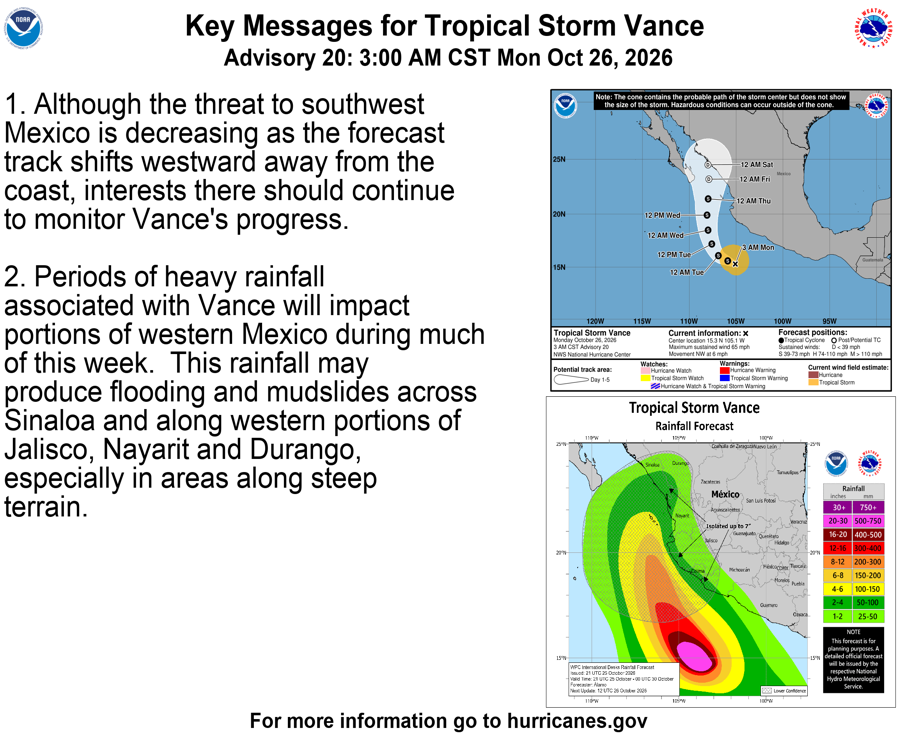
Pacific tropics: Tropical Storm Vance will move ashore into Mexico after finally backing down from hurricane intensity late Sunday.
More flooding? The remnants of Vance could produce significant rainfall in Texas later this week and weekend. In fact, that area is already highlighted under a risk of flooding by late week. Arizona is highlighted for Friday as another non-tropical West Coast storm pushes through.
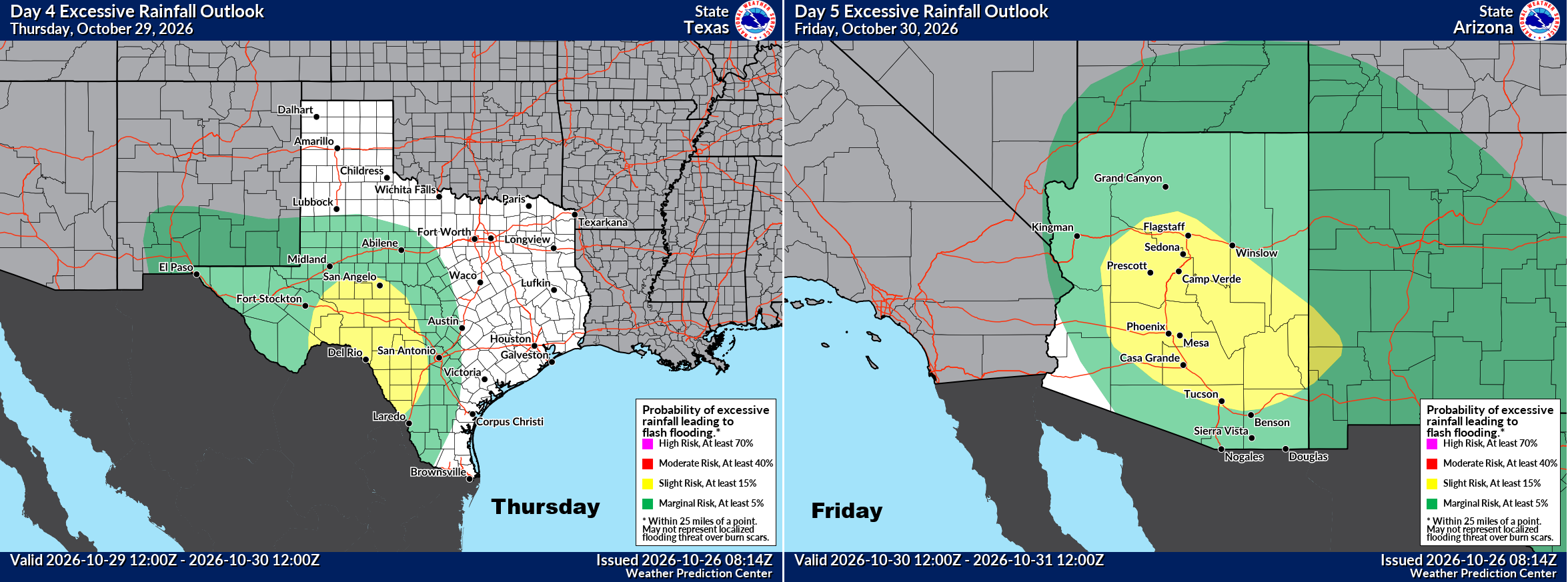
This is probably the weather story of the week, as flooding has been a tremendous, somewhat underreported problem in parts of the Southwest, particularly in the San Juan River. Alan Gerard has more on this at his Balanced Weather site and has been covering it closely since last week. It seems like the worst of this next round of rain will miss that area, but it remains a forecast worth continuing to watch.
Deeper dive: Heat storms?
Reuters published a piece on October 20th that did a dive in on “heat storms,” based on a bunch of weather data they analyzed. Some of you will nod your heads. Some will roll your eyes. It’s worth a read regardless.
The good? They humanized what they defined, something that’s not easy to do. They defined what they believe to be a “heat storm” and then wrote a biography of one and some of the people it impacted. I appreciate that, because it drives home how serious extreme heat is, a concern on a warming planet.
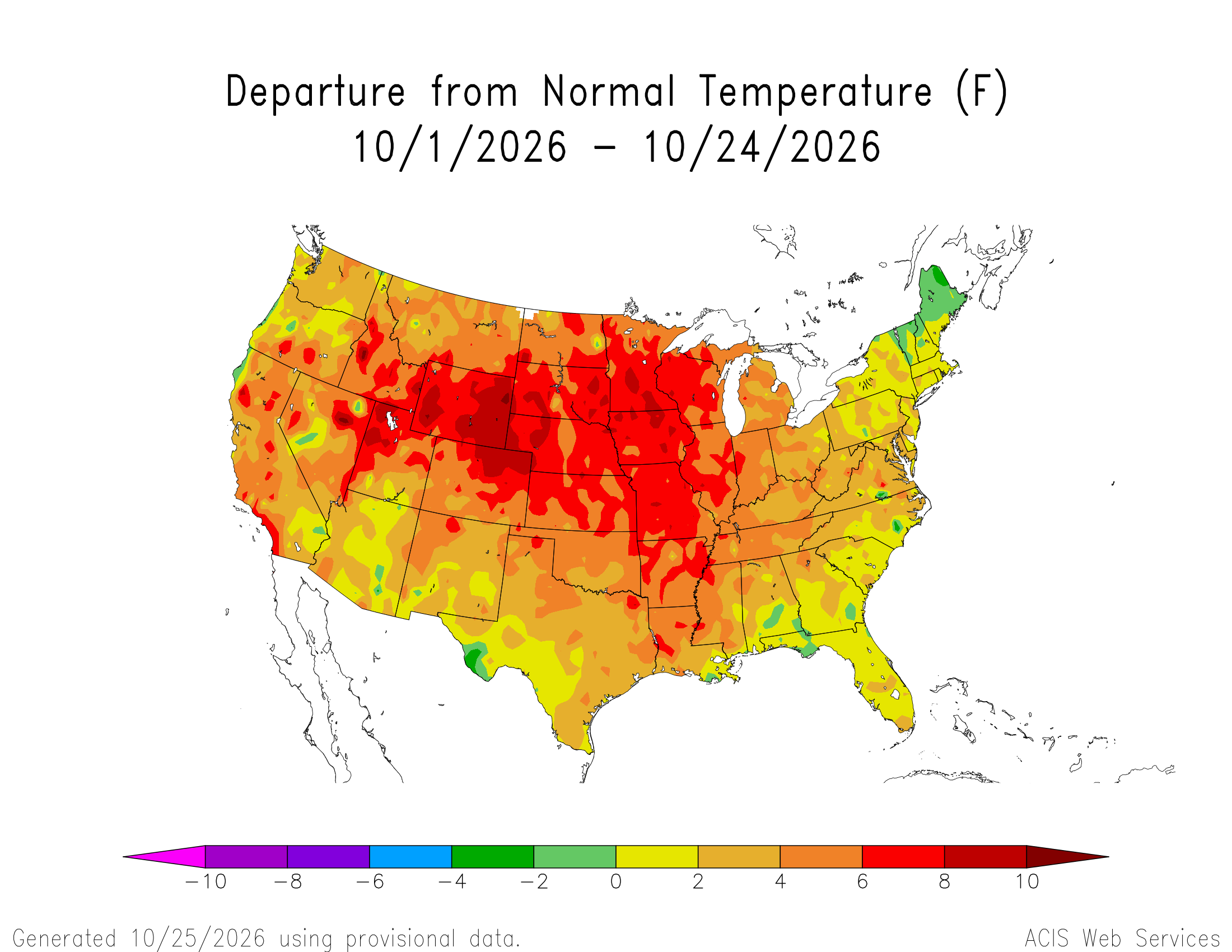
The less good? While I understand the sentiment of the work, it does feel a bit contrived. But then again, when your goal as a journalist is to shed light on topics that perhaps are not adequately being discussed or fairly covered, you have to start somewhere. You could do far worse than where they began. Still, their definitions need some work and (more importantly) more rigorous peer review before it would be accepted. Also, while I do appreciate the idea that names resonate, I don’t always agree with it, such as with what The Weather Channel does with winter storms.
The takeaway for me? We do lack a truly adequate, universal definition of “extreme heat” in the 2020s, and we probably need to get something defined sooner than later. “Heat wave” was fine for the era it was developed and defined. But when places often routinely have top 10 hottest summers on record like we’ve seen in many places in the last 25 years, it becomes important.
The piece is worth your time.
El Niño in the news
I am going to include a section on El Niño, as the world is going to get pummeled by news stories. Some are more worthwhile than others. I’ll try to highlight a few of those here.
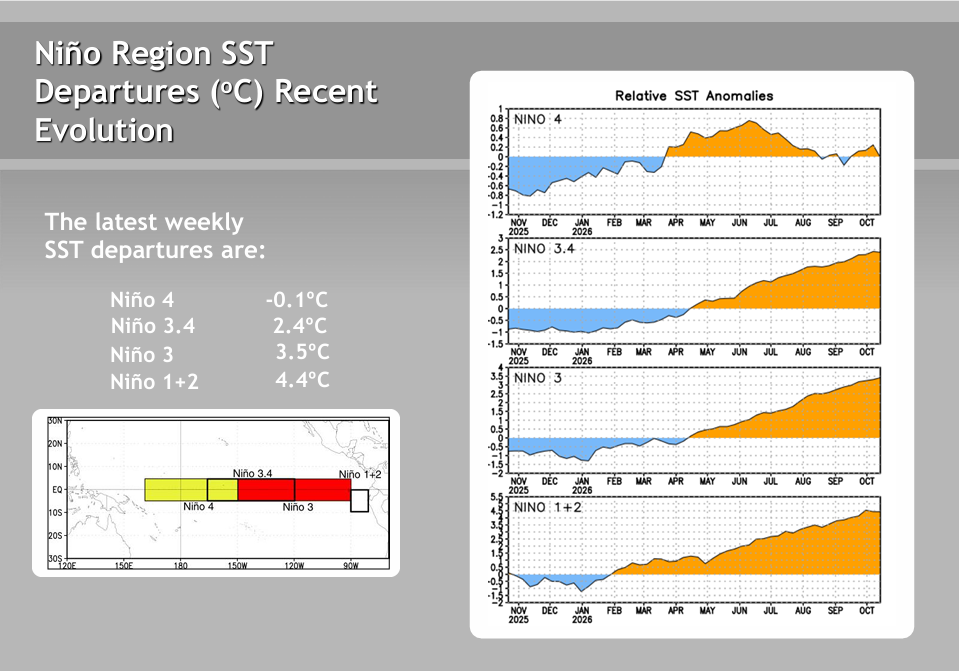
- When dealing with El Niño, it’s nice to have a historical analog to level set with. Fox Weather took a look at some recent past events. Currently 1997-98 is tracking as the closest cousin to 2026.
- Coastal flooding due to king tides, coupled with higher water levels from the ongoing El Niño are causing problems in California again. Get used to this, it’s going to repeat multiple times this winter.
- Where could flooding be worst in the Bay Area this winter? Anthony Edwards at the San Francisco Chronicle found out. ($)
The final word
What is the official definition of “heat wave?” The American Meteorological Society defines it as “A period of abnormally and uncomfortably hot and usually humid weather.” There are a few addendums to that, but it does leave us with the point that this is a definition begging to be redefined.