In brief: The first potential non-Gulf system of the season faces an uphill battle in the Atlantic. It’s possible something tries to develop next week, but it’s more than likely going to end up sloppy.
Let’s start big picture and take a peek at the Atlantic basin this morning.
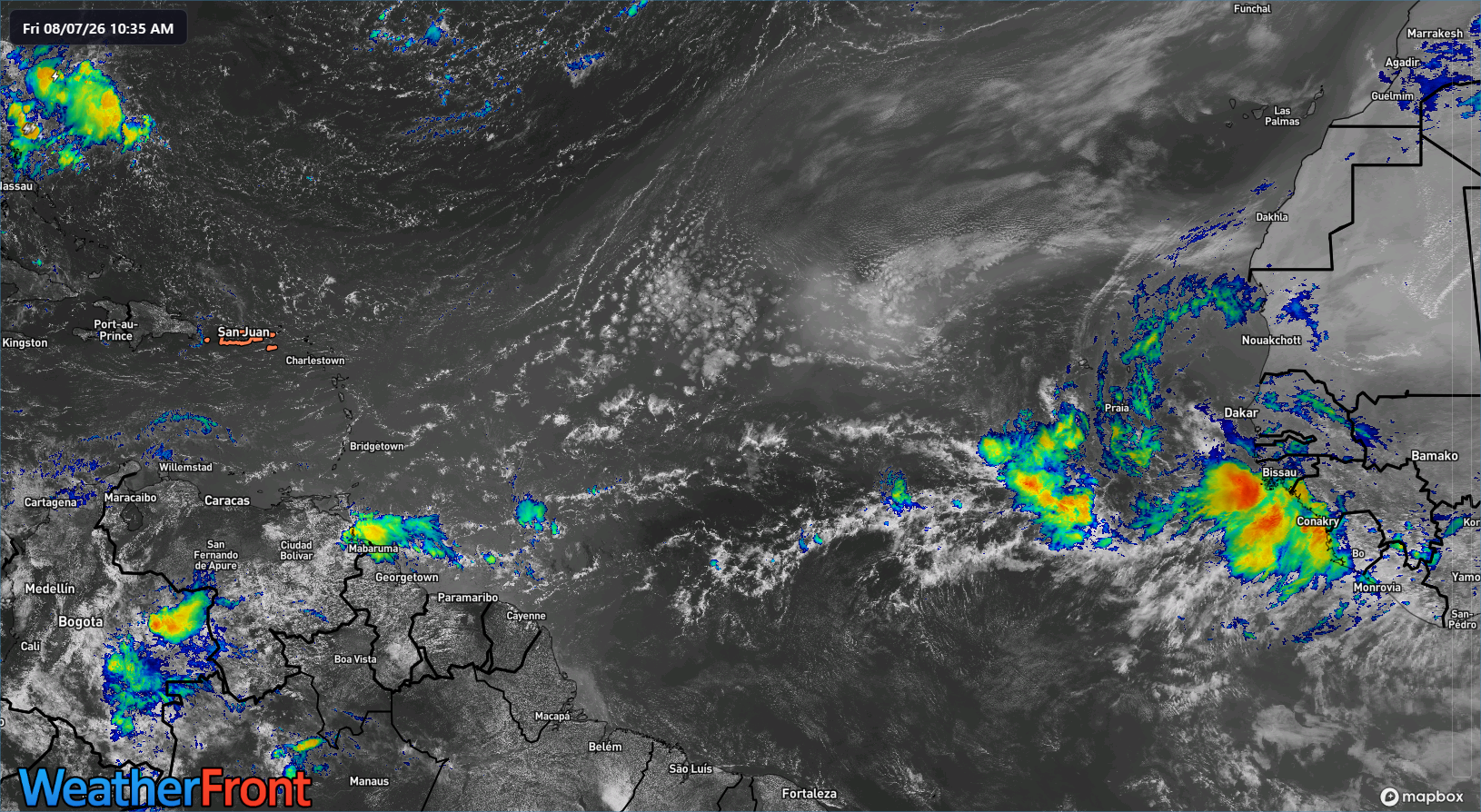
The standout feature is a tropical wave emerging off the African coast today. Over the next few days, this wave will track west through the Atlantic. Wind shear in the eastern Atlantic is actually not too bad at the moment. But dry air? Yeah, there’s a lot of that. Saharan dust plumage all over the Atlantic basin right now.
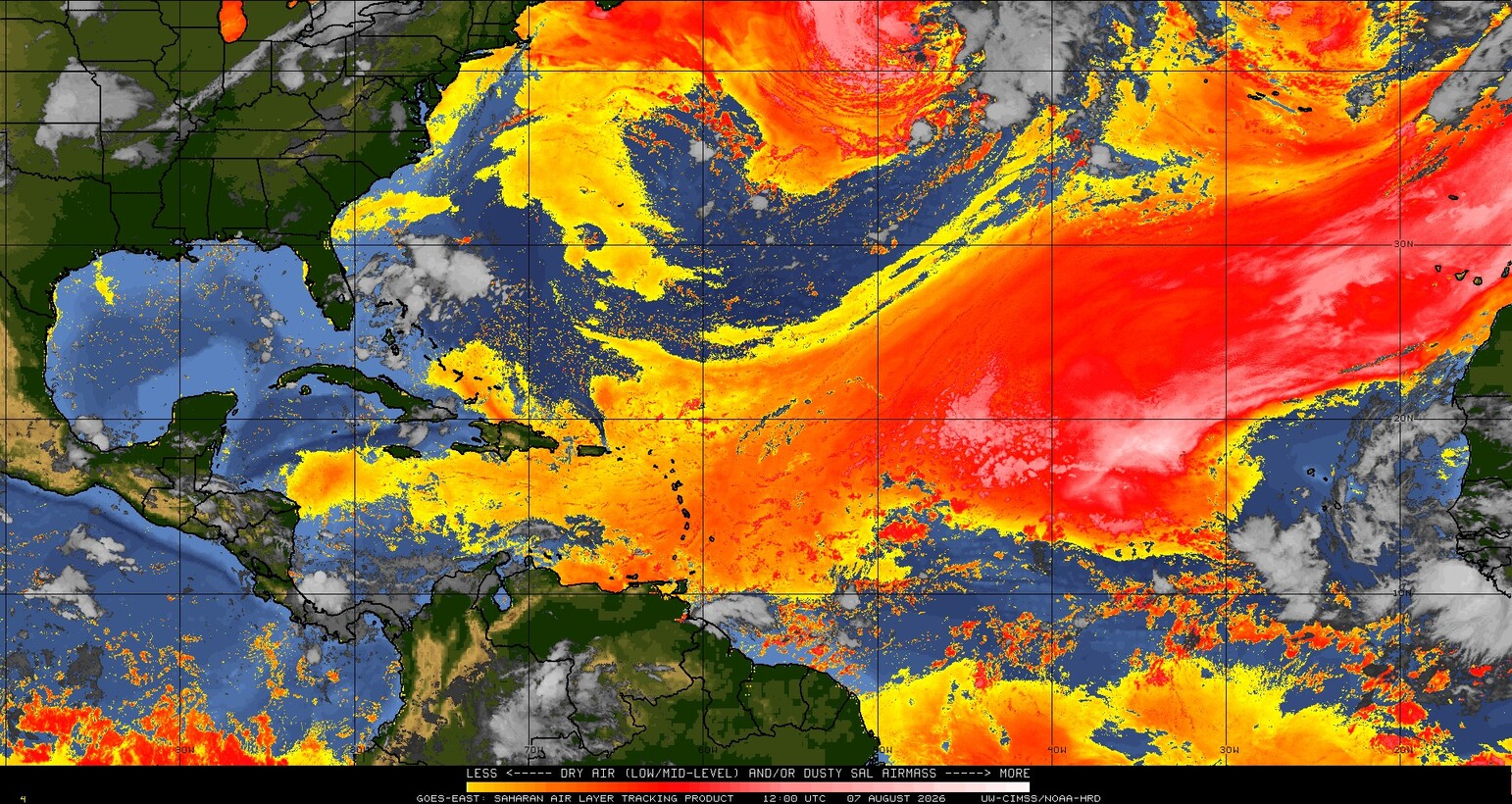
That looks more like July than August, but either way it’s choked with dust. This should mean anything that develops or tries to develop will struggle a bit, if not a lot. Regardless, there’s an interesting split within the models about the future of this disturbance. The physical European model, the original gold standard is modestly bullish on development over the next 4 days, with about a quarter of the 51 ensemble members developing the system.

Some develop it and kill it off pretty quickly too. Go to the AI version of the Euro and the story is, well, pretty much the same.

And what of the current gold standard, the Google Deep Mind ensemble? Not much.

I will say, all the models have had their moments, good and bad with genesis of tropical systems. So I’m not going to read into anything here too much. That said, the one notable takeaway here is that even the models that do develop the system to any extent (mainly the Euro) are lukewarm on its ceiling. Meaning, if you get development, you’re probably getting a sloppy system with a low top end intensity. Sloppy systems deserve love too though, so we’ll watch to see what happens here.
With that in mind, it does not appear at the moment that this system will be a serious threat to anyone downstream. It’s a reminder that despite El Niño, despite the hostile Atlantic, despite the quiet forecast it’s still August and worth checking in on things from time to time.
No other concerns are seen at this time in the Atlantic.