In brief: PTC 1 became Arthur yesterday and offered some erratic behavior around Texas before dissipating. The moisture associated with Arthur remains a serious flooding threat for the Deep South and Gulf Coast.
Let’s start with the present and future and then walk back to yesterday.
First off, Arthur is a remnant low now, but the moisture funnel remains directed at the central Gulf Coast. In those areas, there are numerous flood watches and warnings.
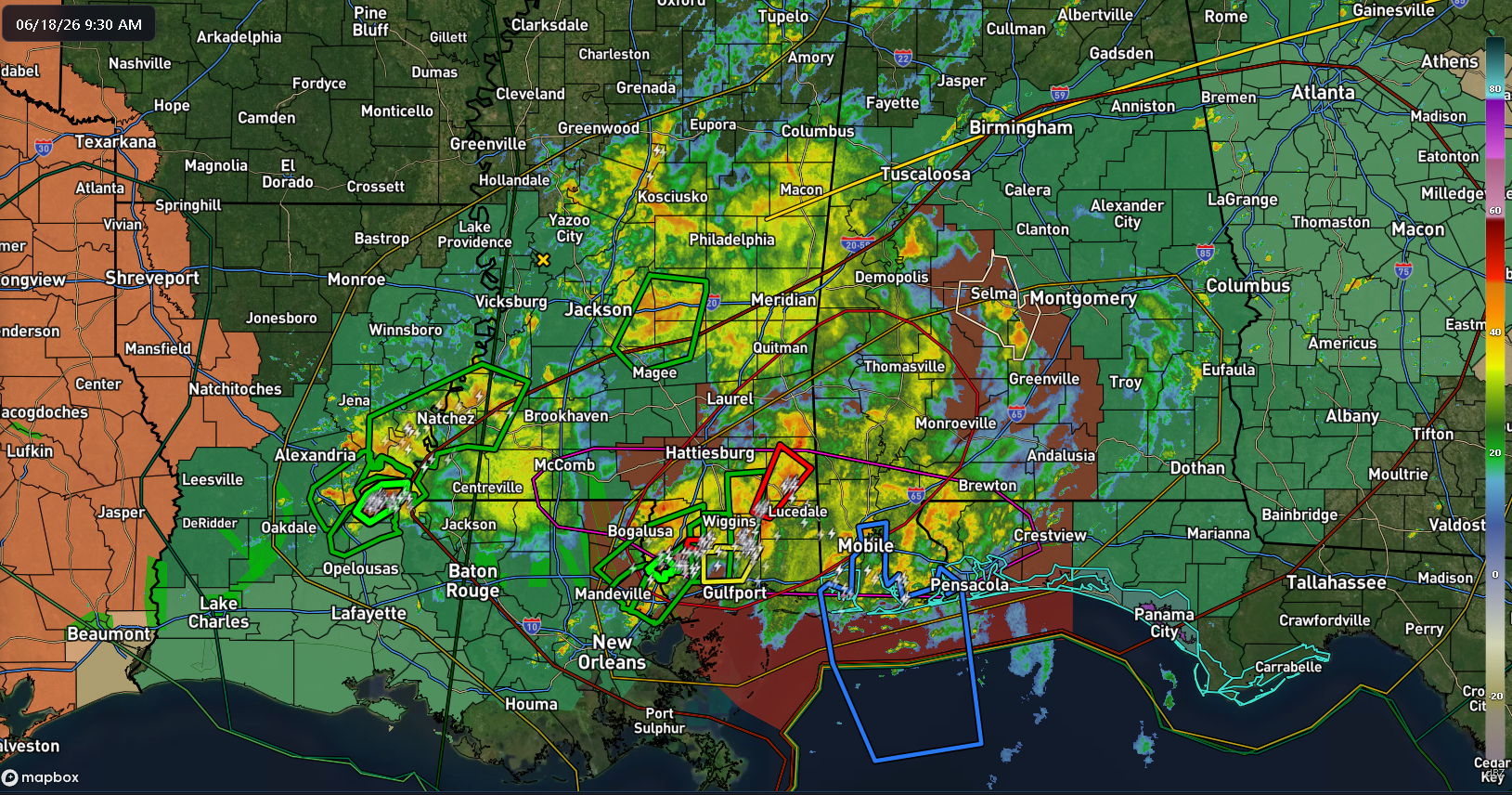
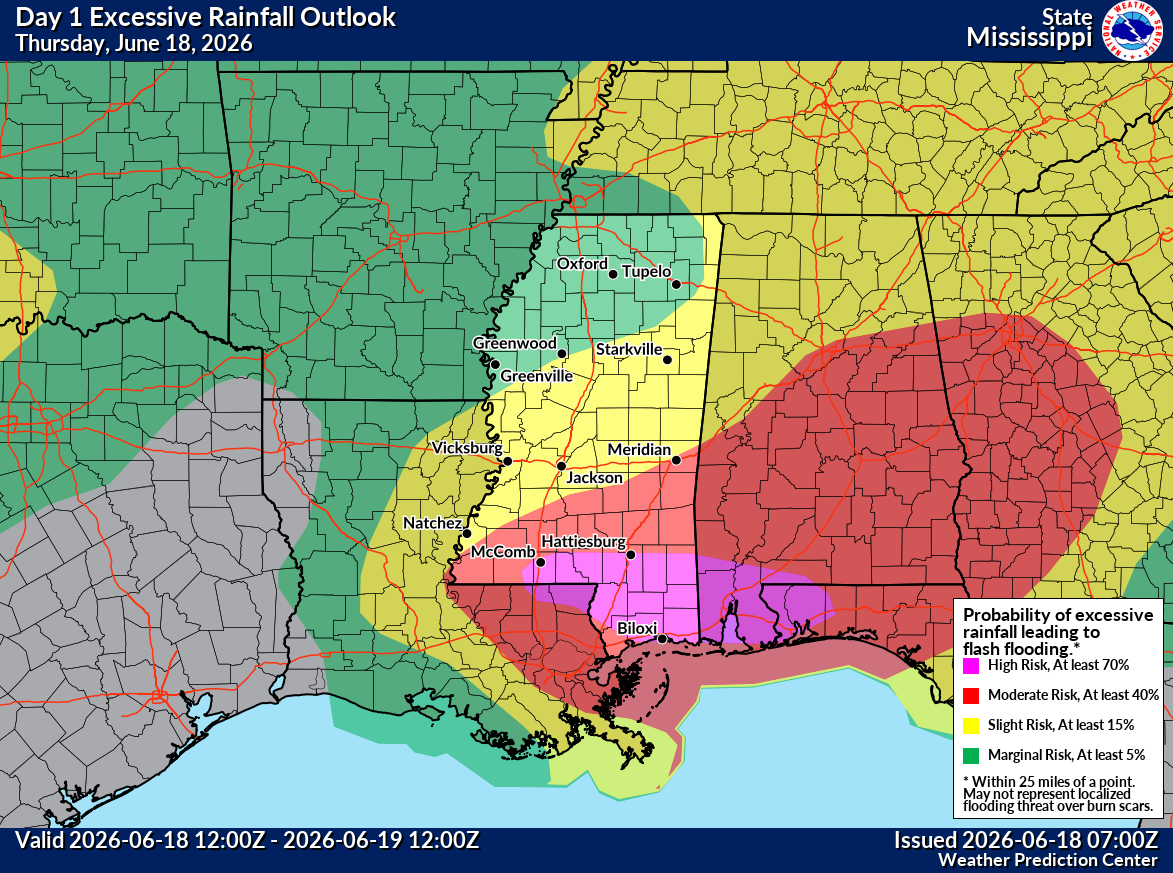
The Weather Prediction Center pulled the trigger on a rare high risk for flooding in the South. This includes Pensacola, Mobile, Biloxi, Gulfport, and Hattiesburg, MS.
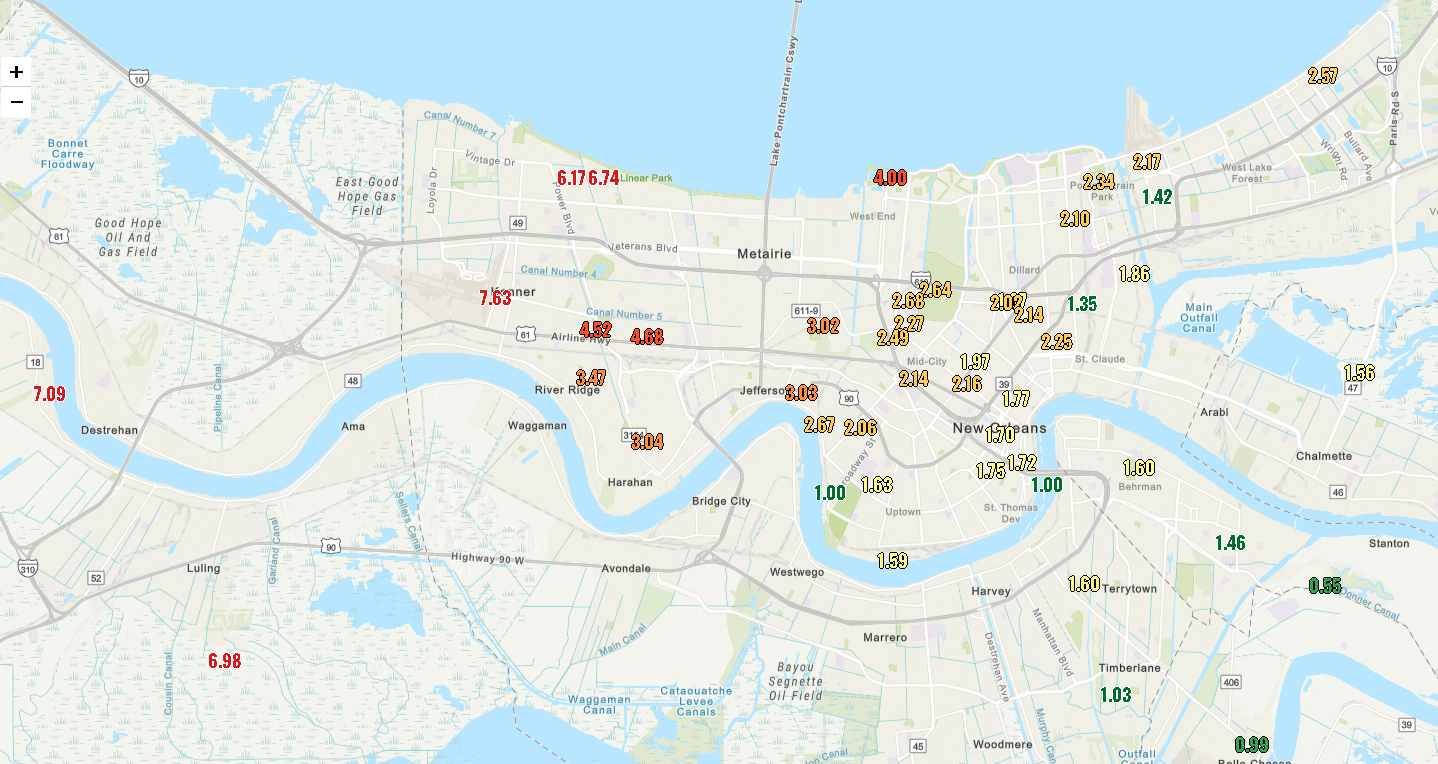
The good news is that some of this has already fallen. The bad news is that additional rains will cause flooding, somewhat locally significant flooding problems. For instance, rain totals around New Orleans ranged from 1 to 3 inches in the city proper to over 7 inches at the airport in Kenner.
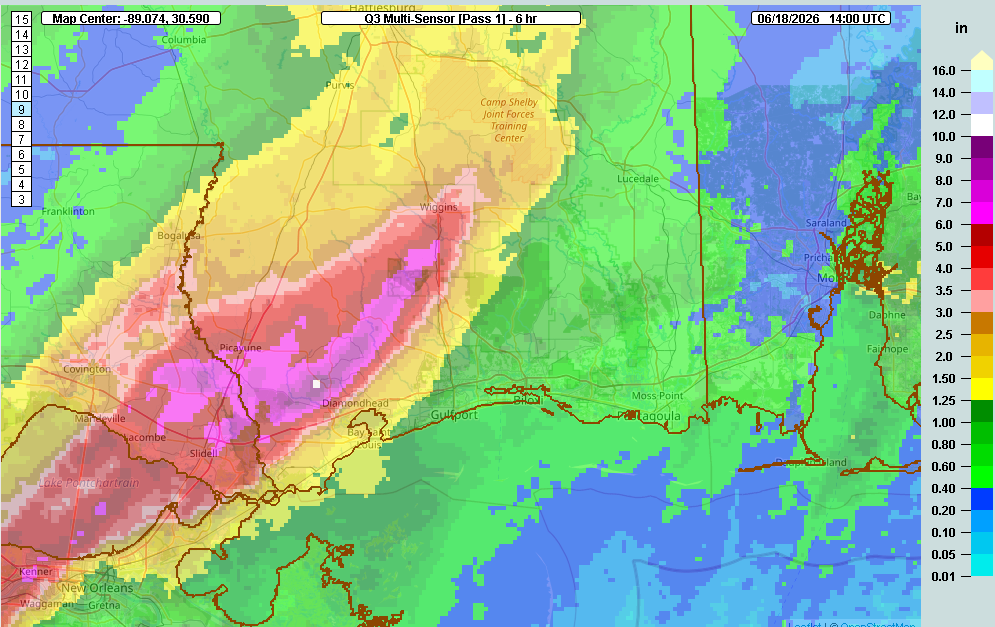
Closer to the high risk itself, we’ve seen anywhere from 6 to 10 inches of rain in southern Mississippi away from the immediate coast. Hancock County has been especially hard hit by rainfall.
Through the rest of today, modeling varies on exactly how much rain to expect, but southern Alabama may be in the crosshairs for the heavier rain next, with areas near and north of Mobile at highest risk. Additional heavy rain is possible across interior southern Mississippi as well. Locally heavy rain may also occur north of Pensacola and into parts of Georgia.
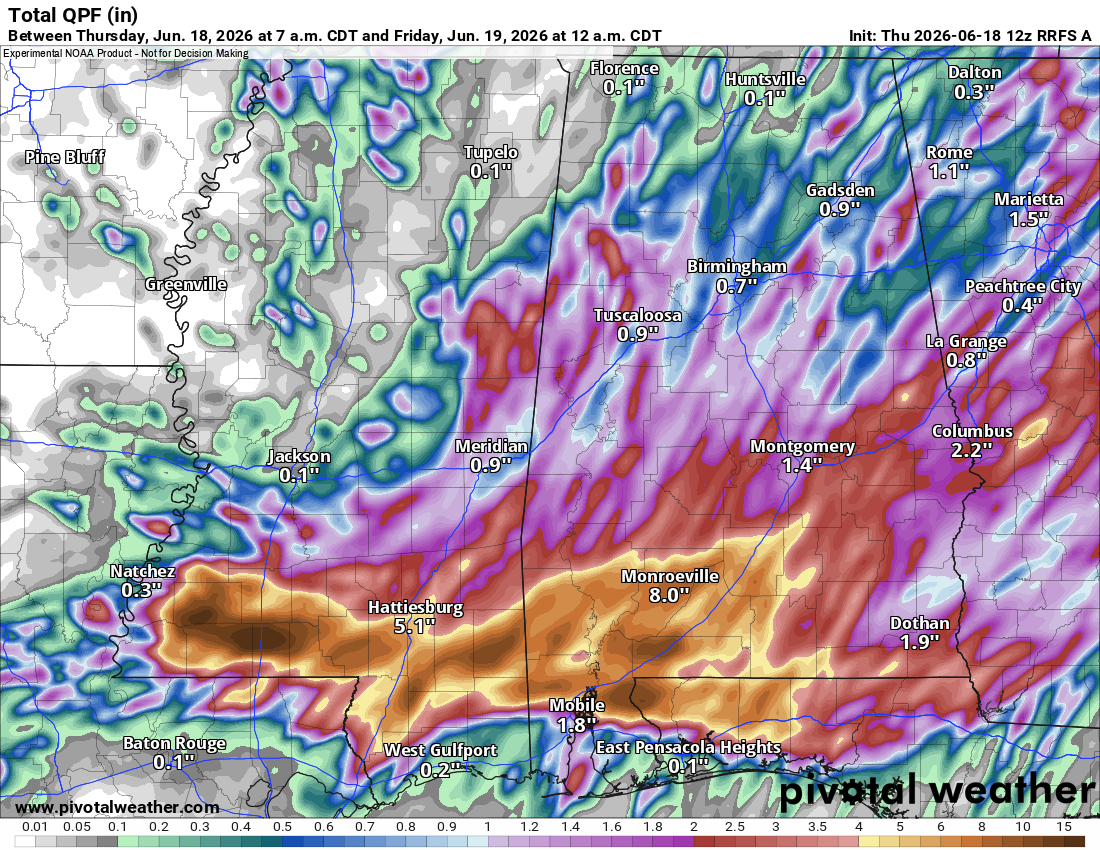
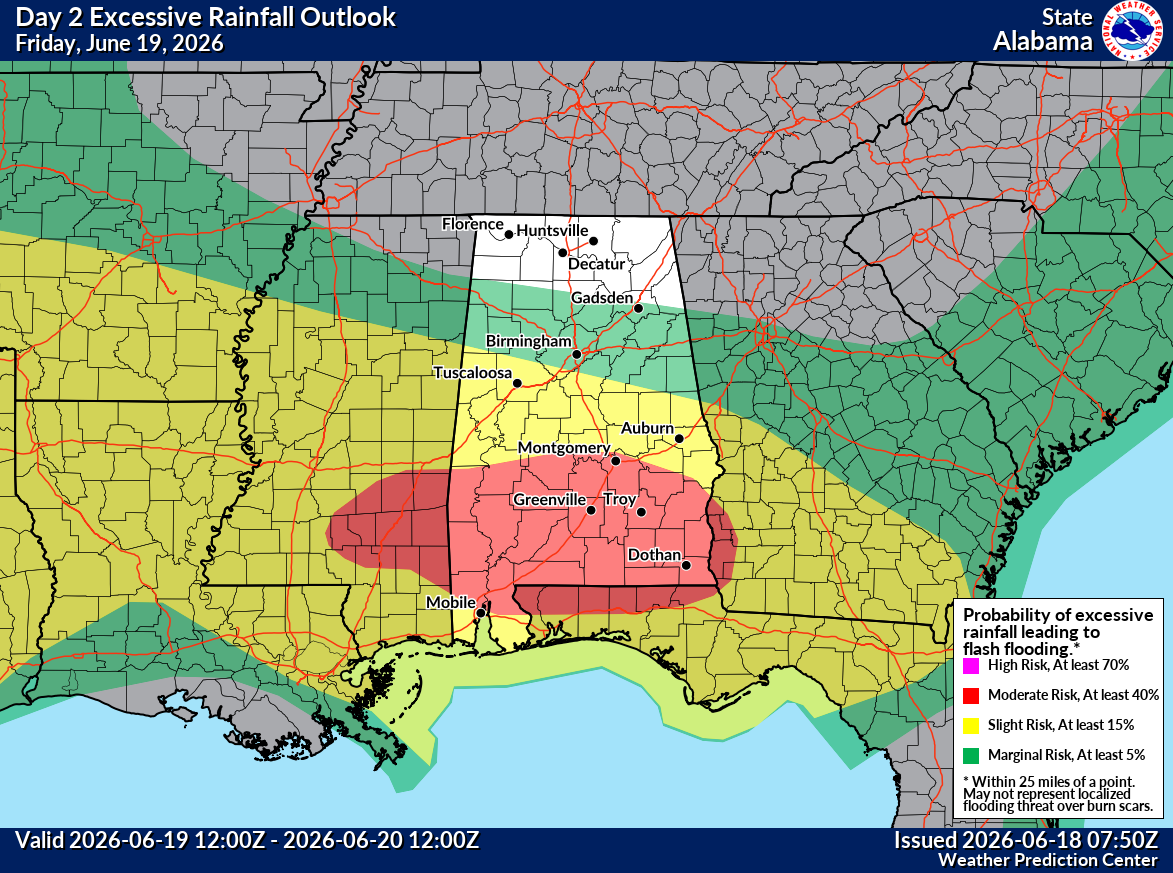
The risk of heavier rainfall continues into tomorrow, with the higher rain risks shifting eastward. Alabama remains under a moderate risk for flooding tomorrow, and that may be because any rain will cause flooding after today’s saturation.
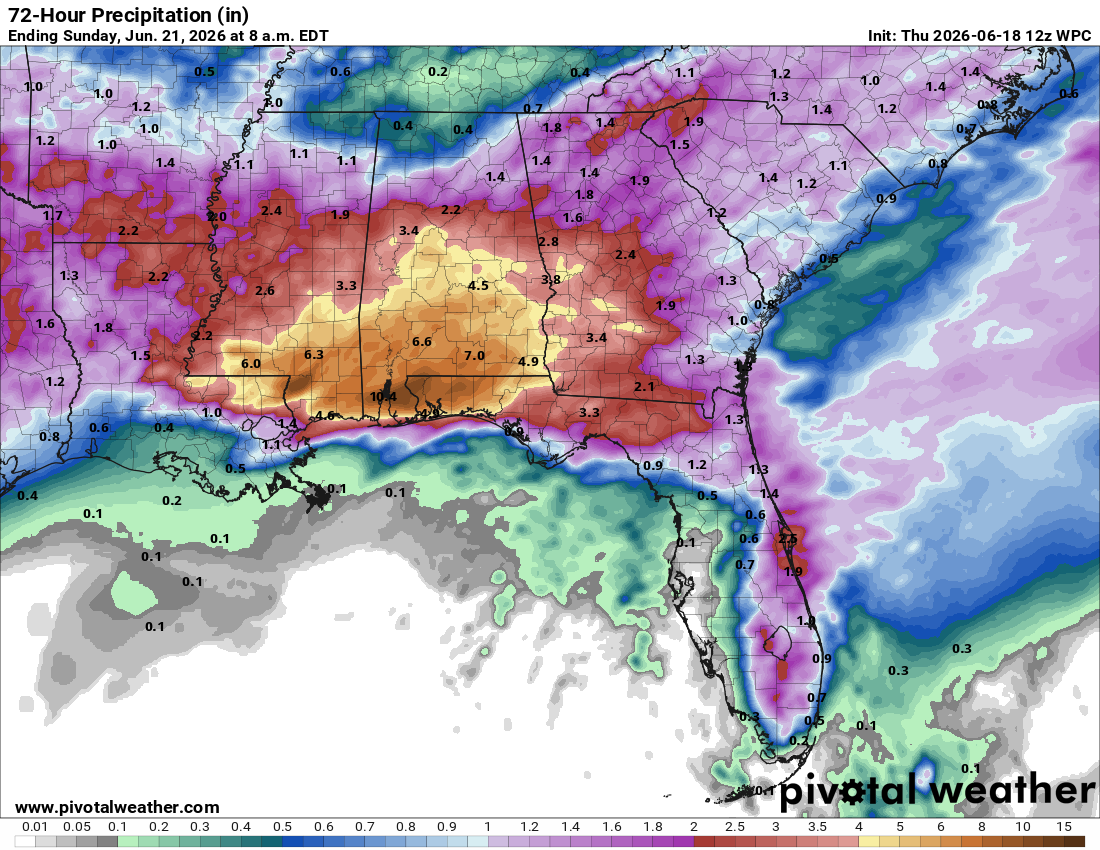
The total rainfall from this event will diminish as you go east, dropping back to 2 to 4 inches in Georgia and 1 to 2 inches in South Carolina.
And with that, we’ll be able to close the book on Arthur.
Roundtable on Arthur
Let’s talk for a moment about Tropical Storm Arthur. We’ve seen some interesting cases of middling tropical storms on the Texas coast in the last 15 years or so. There was Tropical Storm Don in 2011 that absolutely imploded upon approach to the coast. Tropical Storm Bill was a big rainmaker that held its own as it tracked into Oklahoma with saturated soils and the “brown ocean effect” possibly helping aid the heavy rains up there. Tropical Storm Imelda held tropical storm intensity for less than 12 hours, yet caused $5 billion in damage from catastrophic flooding.
Arthur was odd in its own right. First off, maximum sustained winds peaked at about 45 mph. Arthur formed right on the coast of Texas, quickly made landfall, and then tried to reform again near the coast before coming up short. All along, the bulk of the rain and wind was well to the north and east of Arthur’s center.
You can see in the satellite loop how Arthur quickly devolved into what we’d call a “naked swirl,” where the center of the storm is exposed without thunderstorms atop it, often a harbinger of a weakening system. By the time the center of the storm hit Galveston, you needed to travel to near Lafayette, LA to encounter any real rain from Arthur. Wind shear played a huge role in capping Arthur.
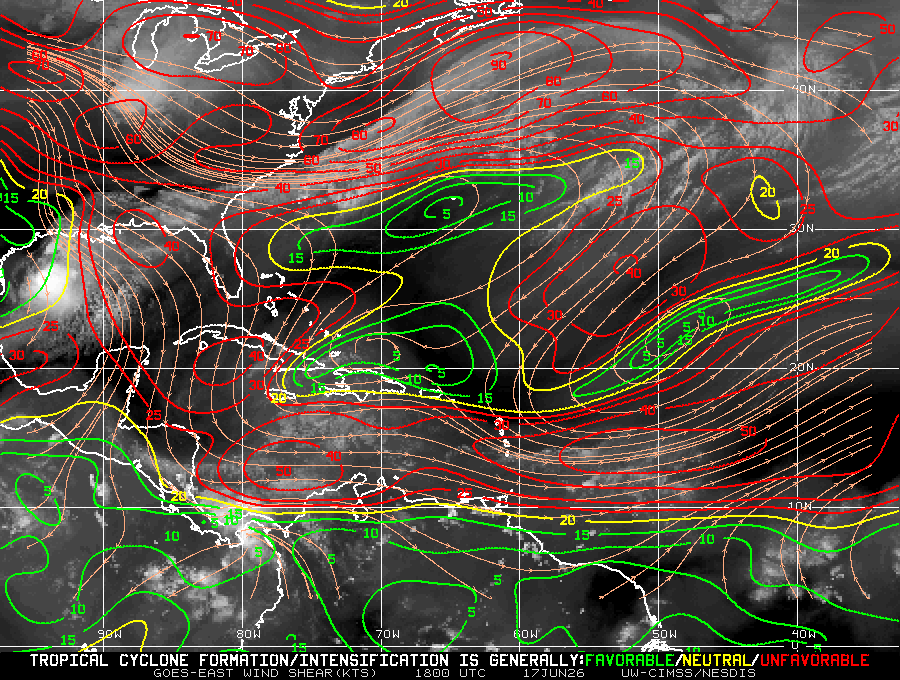
Despite this mess and the general slop that Arthur was, there’s no question the winds verified at tropical storm strength. Maximum wind gusts on Wednesday were anywhere from 40 to 65 mph on the Texas coast between Freeport and High Island. Offshore winds gusted over 80 mph on a (presumably) 100 foot oil platform. Even some 30 to 40 mph gusts occurred in Houston proper.
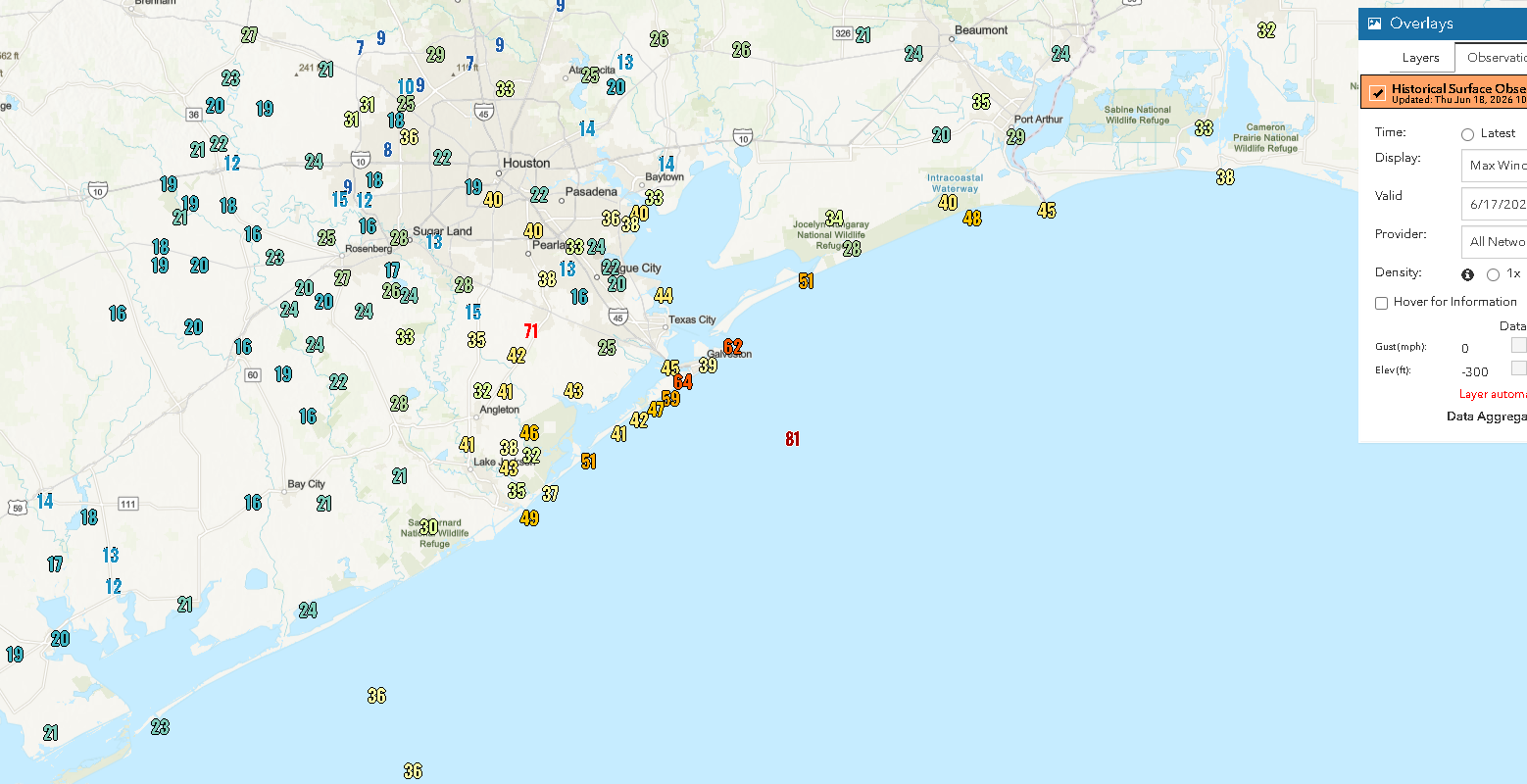
But this was not by any means a typical behavior for a tropical storm. Most of these winds were way out in front of the center. In fact, some of the stronger gusts occurred with clearing skies, so either the drier air punching in behind Arthur’s thunderstorms helped mix down these stronger winds that had been sitting mostly aloft or something else was at play.
Either way, this behaved a lot more like I would have expected to see in later fall (Hurricane Delta in 2020 comes to mind, which mixed down very strong winds in southeast Texas as the storm transitioned to an extratropical feature). I will be curious to see if in the postseason report, the NHC reclassifies Arthur as subtropical or notes what exactly happened here. Again, none of it was what you would have necessarily expected, so if you were thinking Arthur was an odd duck, you are correct.
No other major concerns right now. At this point we’ll plan to return Monday unless the situation changes. Enjoy the Juneteenth holiday weekend for those celebrating and honoring the day (An unsolicited plug for Conroe, TX native Annette Gordon-Reed’s “On Juneteenth,” which explains history and why this day really matters.)